


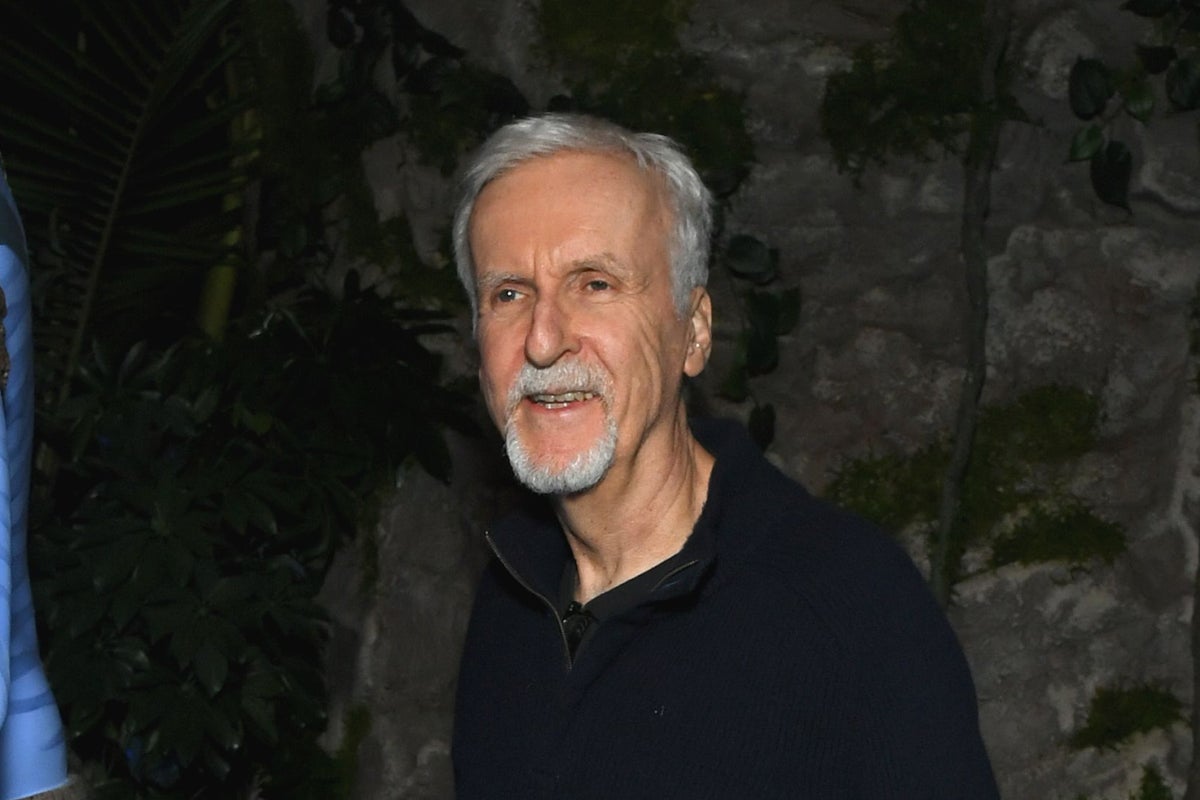
James Cameron says that he finds the idea that AI can create an actor “horrifying”.
In a new interview, the Titanic director talked about using technology and artificial intelligence in films, like his forthcoming Avatar: Fire and Ash, and why he believed generative AI couldn’t “create something new that’s never been seen”.
“For years, there was this sense, ‘Oh, they’re doing something strange with computers and they’re replacing actors’, when in fact, once you really drill down and you see what we’re doing, it’s a celebration of the actor-director moment,” he told the CBS Sunday Morning show about the process of what he called “performance capture”, which he used extensively in Fire and Ash.
The Oscar winner explained how it worked: actors such as Sigourney Weaver and Zoe Saldaña would first film the underwater scenes set on the Earth-like moon Pandora in an almost 250,000-gallon tank.
“We use a whole bunch of cameras to capture the body performance of the actor,” the filmmaker said. “And we use a single camera (or now we use actually two) to video their face. They are in a close-up 100 per cent of the time. But there’s a beautiful thing about being in a close-up 100 per cent of the time. It’s very much like theatre rehearsal.”
However, Cameron said this was the “opposite” of generative AI, where an actor’s performance could be created with a “text prompt”.
“Now, go to the other end of the spectrum, and you’ve got generative AI, where they can make up a character. They can make up an actor,” he said. “They can make up a performance from scratch with a text prompt. It’s like, no. That’s horrifying to me. That’s the opposite. That’s exactly what we’re not doing.”
“I don’t want a computer doing what I pride myself on being able to do with actors. I don’t want to replace actors, I love working with actors.”

On the limitations of generative AI, Cameron continued: “What generative AI can’t do is create something new that’s never been seen. If you think about it, the models – it is a magic trick, what they can do is quite astonishing. But the models are trained on everything that’s ever been done before that; it can’t be trained on that which has never been done.”
“So you will innately see, essentially, all of human art and human experience put into a blender, and you’ll get something that is kind of an average of that. So what you can’t have is that individual screenwriter’s unique lived experience and their quirks. You won’t find the idiosyncrasies of a particular actor,” he added. “The act of performance, the act of actually seeing an artist creating in real time will become sacred, more so.”
Earlier this year, the launch of AI “actor” Tilly Norwood led to an uproar among people in the entertainment industry, particularly after a Deadline report said talent agents in Hollywood were already looking into Tilly.
Norwood is a white, brunette and brown-eyed virtual creation owned by Xicoia, a talent studio attached to the AI production company Particle6.
In the Heights star Melissa Barrera called the news “gross”. “Hope all actors repped by the agent that does this, drop their a**.”
Matilda star Mara Wilson asked: “And what about the hundreds of living young women whose faces were composited together to make her? You couldn’t hire any of them?”
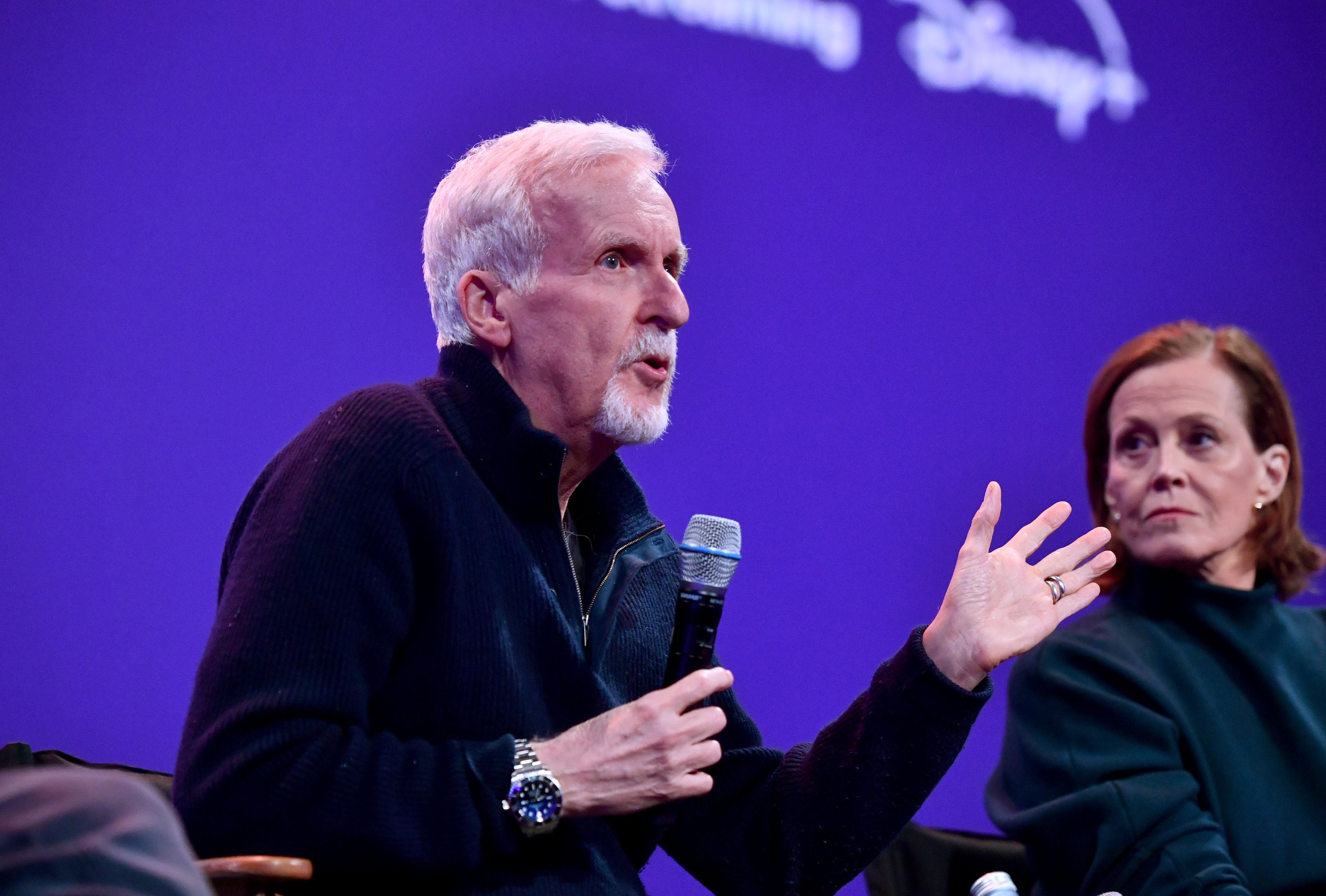
In a separate interview with IGN in late September, Cameron talked about exploring AI to “bring costs down in VFX”, but said when it came to writing, directing, and acting, he would stick to working with humans.
“I don’t want an AI model to write my scripts. Any good screenwriter has a particular lens on the world, a unique lived experience, and that’s what they’re there to express. That’s what directors do. That’s what actors do,” he said.
“I think Gen AI does offer a lot of potentialities and a lot of threats to our creative purpose in life. I think a lot of things are going to change over the next few years. I don’t think what’s going to ultimately change for me is storytelling with actors.”
The 2023 strike by SAG-AFTRA, the Hollywood union representing 160,000 television and movie actors, was partly related to concerns over the rise of AI in filmmaking.
During the strike, SAG-AFTRA alleged that Hollywood studios were proposing the use of “groundbreaking AI” to scan background performers and offer them only a day’s pay while the companies would retain ownership of the scans and use them for any project they wanted.
Avatar: Fire and Ash is set to be released in theatres on 19 December.