


The reason why my work was categorised as ‘violent’ or ‘grotesque’ is purely the fault of the British,” says Park Chan Wook, flashing a knowing smile in my direction. He smiles again, a minute later, when a translator repeats his words back to me. The revered South Korean filmmaker is joking, but may have a point: when Park first became a sensation in Western cinephile circles, in the early 2000s, it was British distributor Tartan that chose to market his films – Oldboy, Sympathy for Mr Vengeance, and Lady Vengeance – under the banner of “Asia Extremes”.
“It wasn’t just Korean films, but Asian films – mostly horrors – that were included in that category, as well as my works,” Park says, sitting, legs crossed, on a sofa in a central London hotel suite. Admittedly, Park’s own macabre imagination was never much help in beating the extremity allegations: across his first few films, the director explored such winsome scenarios as murder, incest, child kidnapping, organ harvesting, live octopus consumption, botched penknife harakiri, and dental mutilation. “As I made more movies, and became more internationally known, I think I naturally grew out of that label – of being on the outskirts of what’s mainstream,” he tells me. “But I didn’t try to escape those old labels. I simply continued to do what I’ve always been doing.”
Now 62, with glasses, a smart sweater and coiffed grey hair, Park looks every bit the elder film-industry statesman in waiting. If there’s a dissonance between the serene and unruffled man sitting opposite me and the grisly – though never gratuitous – violence of his work, then it’s one that also emerges within the films themselves: Park’s movies are as defined by their nuance and quiet humanism as their shock value. His recent films, including 2017’s sexy, twisty period masterpiece The Handmaiden, and 2022’s elegant romantic thriller Decision to Leave, have juggled these impulses sublimely. And that’s also the case with his latest film, No Other Choice, a quintessentially Parkian story of a paper manufacturing employee (Lee Byung Hun) who deals with a professional redundancy in the only sensible way: by enacting a chaotic murder spree.
Lee plays Yoo Man Su, a family man whose dark side comes slithering out when his company, now under American ownership, cuts him loose; Son Ye Jin is electric as his long-suffering wife. Struggling to find another job in an ever-shrinking market, Man Su decides that the best way to get an edge is to eliminate the competition – corporeally. He tells himself he has “no other choice”, a fallacious excuse uttered by several characters over the course of the film.
Lee is wonderful here, tragic, clownish and despicable at once, a vision of masculinity in crisis. Yet he always remains, on some level, unsettlingly relatable. “I want the audience to experience the moral dilemma that the character’s experiencing,” says Park. “I want the viewing experience to be asking questions. Man Su is just like us – normal people who [sometimes] make selfish decisions, and take foolish or evil actions. Maybe not to this degree, but we all make mistakes and do bad things in our everyday lives.”
As you portray individuals in a modern society, you inevitably run into anti-capitalist ideas, because I think those two are inseparable
The screenplay is adapted from The Ax, an America-set novel by Donald Westlake. When he was first trying to make the film, over a decade ago, Park had planned to shoot it there. He’s made English-language projects since, including the frosty Nicole Kidman psychodrama Stoker (2013) and the le Carré adaptation The Little Drummer Girl (2018) with a young Florence Pugh. For funding reasons, though, he eventually transposed the story to Korea. It was a change that opened up a few culturally specific possibilities (namely, a gruesome misuse of a bonsai greenhouse), and the film’s caustic anti-capitalist message is one that rings true wherever you are in the world.
It is perhaps this critique of capitalism – and the mordant humour with which it is expressed – that has prompted so many comparisons with Parasite, Bong Joon Ho’s landmark Oscar-winning 2019 satire. They’re wholly different films, but share a certain mordant anger with the state of the modern world. “I’m not making films to yell out some slogan, or to make a political pamphlet,” says Park. “But as you portray individuals in a modern society, you inevitably run into [anti-capitalist ideas], because I think those two are inseparable. When you really dig into the individual’s internal world, you also dig into the systematic problems of our society.”
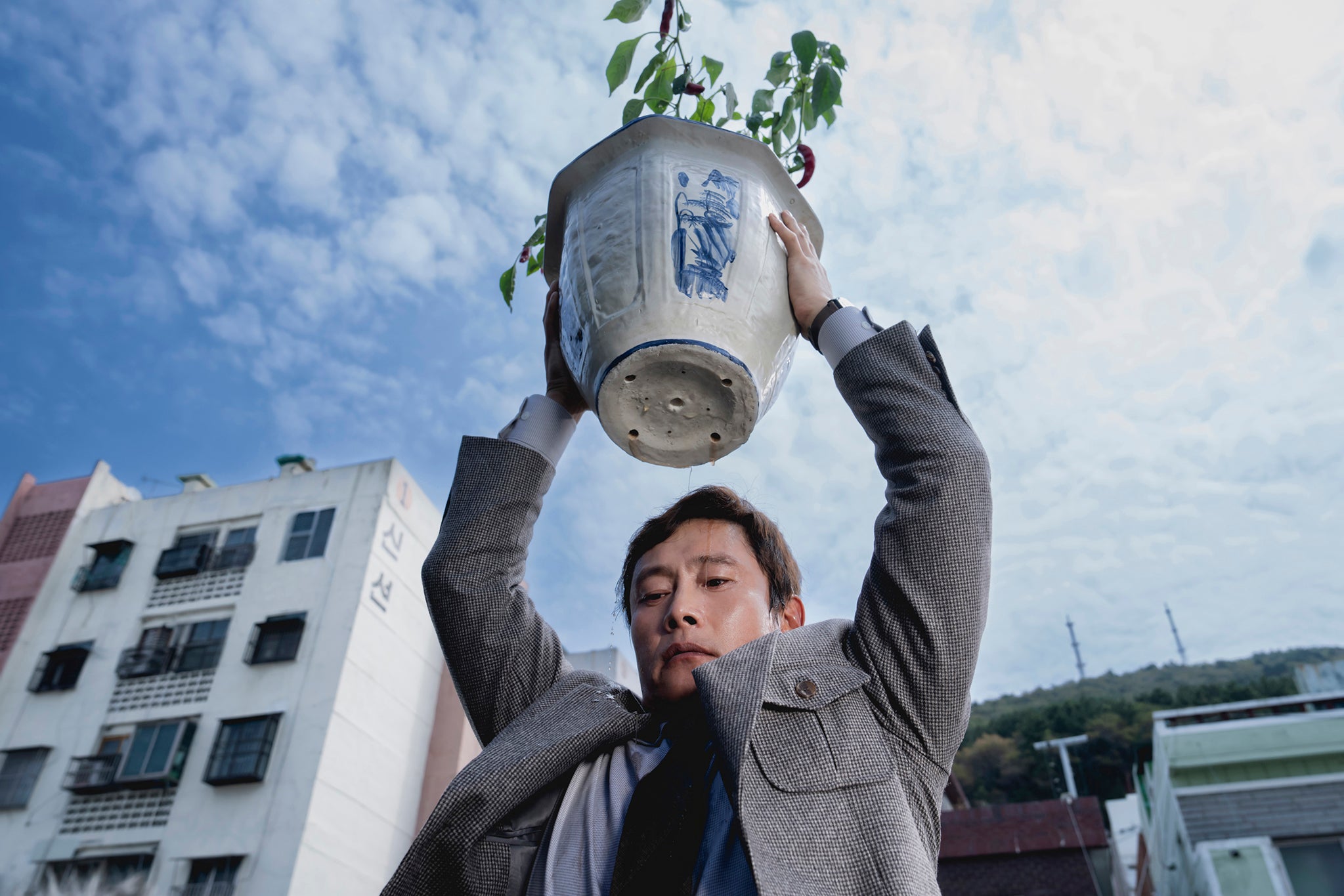
No Other Choice gave Park the chance at a reunion with Lee – now most recognisable in the West as the main villain in Netflix’s Squid Game – years after he starred in the filmmaker’s breakthrough, 2000’s Joint Security Area (JSA). A tragic and humane look at the divide between North and South Korea, the film came off the back of two unsuccessful initial features for Park, The Moon Is… the Sun’s Dream (1992) and Trio (1997). “[Lee and I] were both in the beginning of our careers,” he recalls. “I had two flops before JSA, and Byun Hun had four flops – he was doing well on TV, but he wasn’t doing so hot in film. So [JSA] was really the last opportunity to work in film for both of us, which is why we were very nervous working together. Even when we were eating or drinking together, we would only talk about work.
“This time around,” he adds, “it was different. We both had a more relaxed view of the entire project. We would just relax and chat about other things in addition to work, and I think that’s actually allowed us to come up with fresher ideas.”
Back in 2000, JSA was nothing short of a phenomenon – the highest-grossing film in Korean history at the time. Park followed it up with the darker, cultier “vengeance trilogy”, three narratively unconnected films grouped together by a shared fascination with revenge. By the 2010s, he had ossified his reputation as one of the leading international filmmakers on the world stage. But while the success of his films, and Bong’s, has created an outside perception of a Korean film industry boom, there are, he says, real causes for concern.
“Despite the few films that have become well known across the world, I think it’s not a secret to say that the Korean film industry is in a state of great danger,” says Park. “And that is because theatres are also in a state of great danger. During the pandemic, Korean audiences weren’t able to go to the theatres, and that’s when they realised that they could watch something fun at home as well – and they’ve just never returned to the theatre since then.”

The problem, he says, is that it has become a cycle – with Korean film companies taking all the wrong lessons from the migration to streaming. “Investors began to invest less in movies, and even when they do invest, they don’t go for bolder stories,” he explains. “They try to go for quote-unquote ‘safer’ projects. And because of that, even if a Korean movie is released in theatres, they go to watch it and realise that it’s too predictable and it’s just not as fun. So fewer of them then return, there’s less revenue, and then as a result, again, the investors invest less in the projects.”
There is some comfort to be found in the fact that Park’s films, at least, continue to find an audience: No Other Choice is now the second-highest-grossing Korean film ever in the US, and is tipped for a Best International Film nomination at this year’s Academy Awards. “When I first started off as a filmmaker, I wanted to make films of smaller scale, and I could have never imagined a Korean film would be shown abroad,” says Park. “I thought that I would live the rest of my life making movies for a small minority of people in Korea. So to think about what has happened to me in the last few years, it’s just very different from what I had imagined at the beginning of my career.”
One of the underlying ideas in No Other Choice is how identity becomes wrapped up in work: Man Su’s loss of his job as a paper executive doesn’t feel just like a redundancy, but an attack on his very personhood. I suggest that for someone working in the arts, like Park – someone for whom the work itself is an expression of innermost thoughts and obsessions – it must be even harder to disentangle his sense of self from his career.
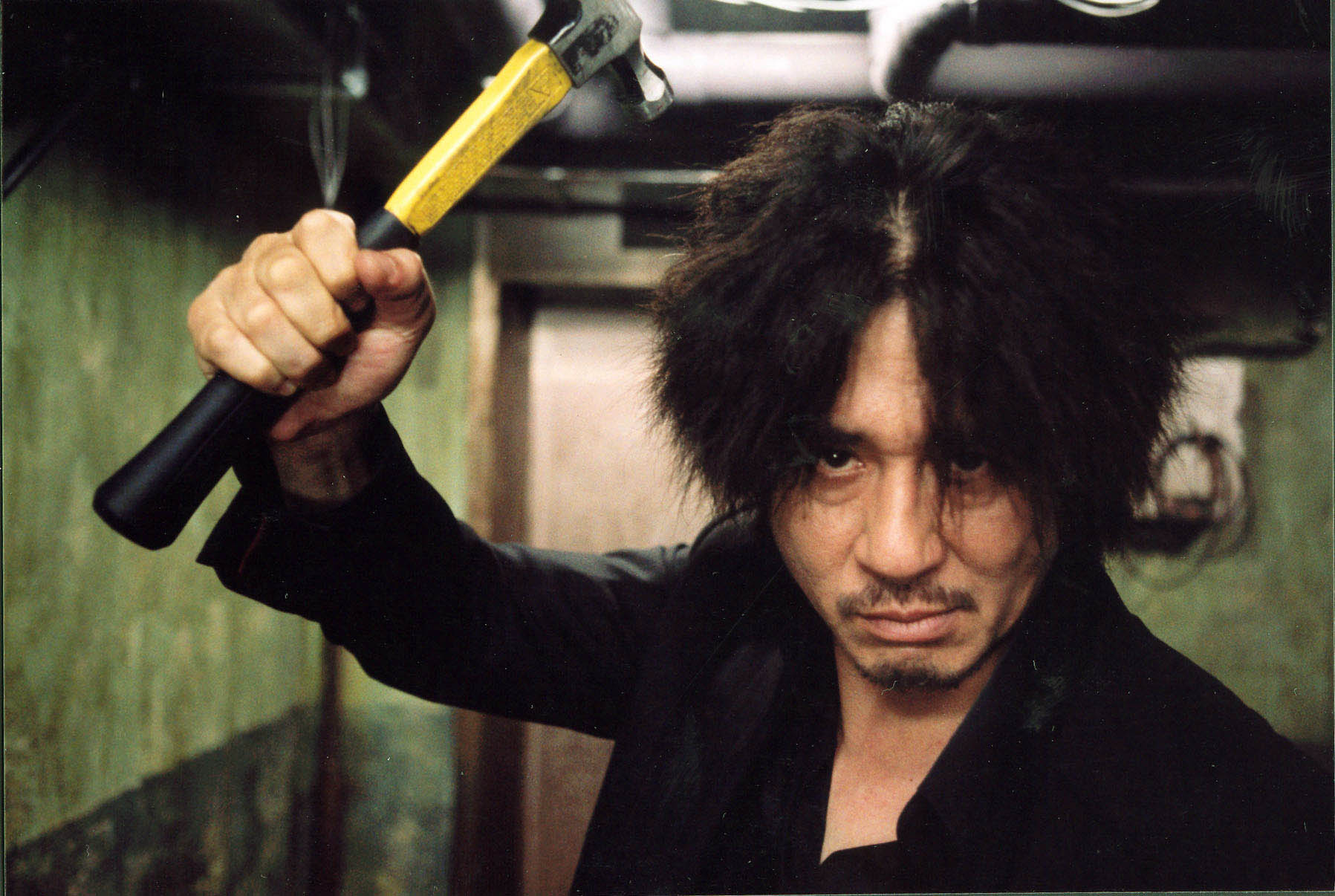
“Most people don’t consider film and TV as something that’s very important, or a sacred form of art,” Park says. “I think most of the time, people think of it as a two-hour way to kill time, or a source of entertainment. And so in that way, I think making paper and making film is fundamentally very similar, and it is foolish to identify myself only as a filmmaker. But the truth is, I have also lived a life like Man Su.”
He smiles again, a little wistfully. “While I was making this film, I did think to myself… I should live less like that.” He may try, of course. But in the end, is there really any other choice?
‘No Other Choice’ is in UK cinemas from 23 January