


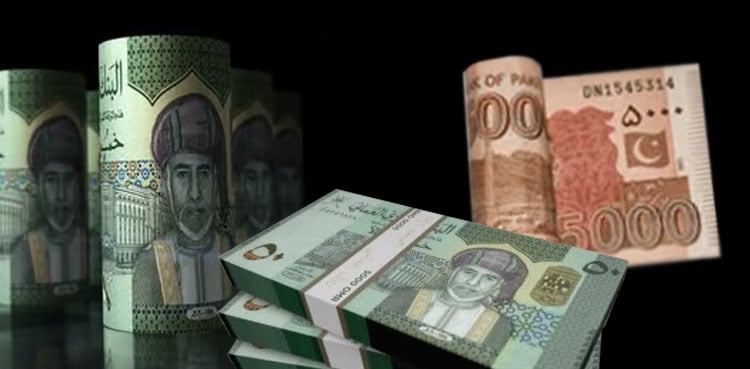
As of today, April 4, 2026, one Omani Riyal (OMR) is trading at 725.92 Pakistani Rupees (PKR), slipping slightly from last week’s 726.14 PKR.
For those in Pakistan monitoring the OMR to PKR exchange rate, the pair has continued to trade in a narrow, relatively stable band even as the Iran conflict keeps global energy markets on edge.
The Omani Riyal (﷼) maintains its long-standing stability, pegged to the US Dollar at 2.6008 since 1986 and supported by Oman’s oil and gas revenues. The Pakistani Rupee (₨), guided by the State Bank of Pakistan, draws ongoing strength from healthy remittance inflows while contending with the fallout from elevated global fuel costs.
This week the OMR/PKR pair saw only a minor softening, staying within a tight range. Brent crude has remained highly volatile due to the Iran war, recently trading between roughly $100 and $115 per barrel after peaking higher in March amid severe disruptions in the Strait of Hormuz. Diplomatic efforts and ceasefire signals have triggered sharp swings, but the overall elevated price level continues to offer some underlying support to the oil-linked Riyal through potential revenue gains for Oman. On the PKR front, February 2026 remittances stood at a solid $3.29 billion, up 5.2% year-on-year, with significant contributions from Gulf countries including Oman. This flow helps provide a buffer for the Rupee despite higher energy import bills. The rate remains below the longer-term average near 732 PKR, but the oil dynamics are limiting sharper declines for now.
The ongoing Iran conflict — now in its fifth week with continued US-Israeli actions, Iranian responses, and persistent heavy restrictions on shipping through the Strait of Hormuz — continues to dominate energy markets. The strait, a vital route for a large portion of global oil and LNG, has seen drastically reduced traffic due to security risks, vessel attacks, and Iranian control measures. While this has driven record monthly gains in oil prices earlier in March and created potential windfalls for nearby exporters like Oman, it significantly raises Pakistan’s oil import costs as a net importer. This could push up local inflation and place gradual pressure on the PKR if the disruptions persist. Recent talks of ceasefires and diplomatic channels (including Pakistan’s role) have introduced some volatility, but strong Gulf remittances are helping mitigate the immediate impact.
For Pakistani families depending on earnings from Oman, today’s rate means a worker sending 500 OMR home receives roughly 362,960 Pakistani Rupee — a steady sum that still helps cover groceries, school fees, and household needs, even as fuel and transport costs in Pakistan feel the strain from high global oil prices. Trade between Oman and Pakistan (around $1–1.2 billion yearly, with Pakistan exporting textiles and rice while importing energy products) is navigating these mixed conditions: the oil-linked Riyal offers some balance, but prolonged high energy prices could increase costs for Pakistani importers. For travel, 1,000 PKR still converts to about 1.378 OMR for a Muscat trip, with very little weekly change.
The coming weeks will hinge on whether diplomatic progress eases the Hormuz situation or if oil prices remain elevated amid ongoing tensions. February’s healthy remittance data provides some reassurance, but the regional uncertainty keeps the potential for sudden movements alive. For live rates, reliable sources like Xe, Investing.com, or official State Bank of Pakistan channels are the best bet