


Texas operates the most competitive wholesale electricity generation market in the United States. Every day, hundreds of power generators compete in ERCOT-run auctions to deliver the cheapest power to homes and businesses. The retail electric market is equally robust, with retail electric providers (REPs) vigorously competing for customers based on price, service, and preferences. The PUCT’s www.powertochoose.org website makes it easy for Texans to shop among hundreds of REPs.
Thanks to customer choice and competition, electricity consumers in the ERCOT region of Texas have saved millions of dollars over the past 25 years. Yet one critical segment of the Texas electric market remains untouched by competition: the local transmission and distribution utilities (TDUs). These incumbents operate as a “Soviet-like” monopoly. When new transmission lines are needed, incumbent TDUs are automatically awarded the projects in their service territories with no competitive bidding. They recover all costs plus a healthy return on invested capital. A 2019 law reinforced this monopoly by restricting new transmission ownership and construction to companies that already own and operate transmission lines in Texas.
The 5th Circuit Court of Appeals struck down this law, noting the absurdity with a pointed analogy: “Imagine if Texas—a state that prides itself on promoting free enterprise—passed a law saying that only those with existing oil wells in the state could drill new wells. It would be hard to believe.” The U.S. Department of Justice under President Trump’s first term supported the court’s ruling. Nevertheless, the status quo persists: only existing transmission owners get to build new lines.
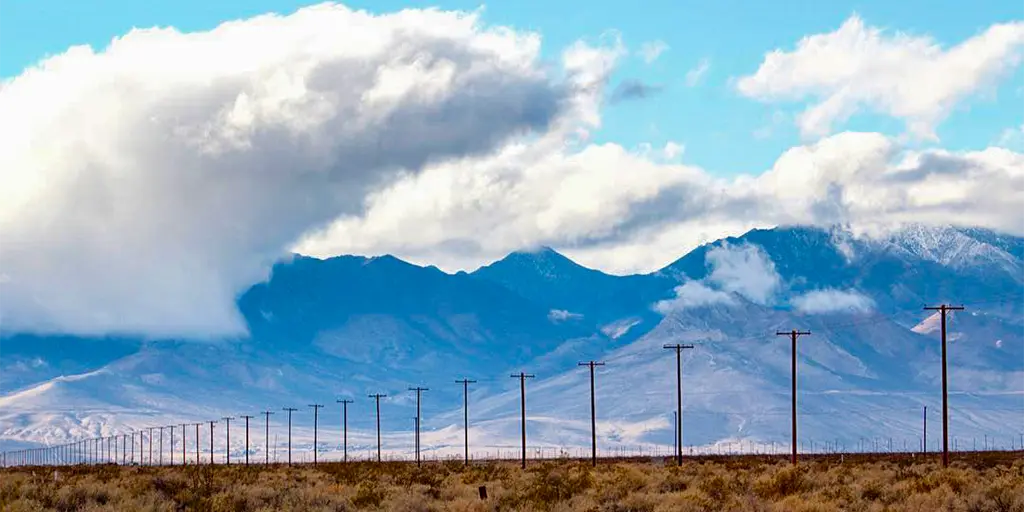
Enough is enough. Over the next five to ten years, Texas electricity demand is projected to double. To keep pace, ERCOT is planning massive new transmission projects. The “Permian Basin Reliability Project” and the “STEP Eastern backbone,” for example, are expected to cost $33 billion—the largest and most expensive transmission initiatives in Texas history. Under the current system, these projects will simply be handed to the incumbent TDUs on a “cost-plus” basis.
It’s time to introduce competition into the awarding of transmission projects. Competitive transmission is not theoretical; it is already delivering major benefits elsewhere in the U.S. The PJM Interconnection, serving 65 million people across 13 states from Illinois to Maryland, has long used competitive solicitations for transmission projects. These processes have consistently delivered savings of 20-30% compared to incumbent utility cost estimates. Similarly, the Midcontinent Independent System Operator (MISO), which serves 45 million customers across 15 states (including parts of Southeast Texas), has seen winning bids come in 38-45% below the highest bids. Given the enormous capital expenditures planned for ERCOT, even a modest 5 or 10% cost reduction through competition would save Texas ratepayers billions of dollars.
Competition delivers benefits beyond lower costs. It drives faster project delivery and innovation. Non-incumbent developers, currently locked out of Texas, have strong incentives to finish projects on time and on budget—any overruns fall on them, not ratepayers. New entrants also bring fresh ideas, such as creative ways to minimize the need for new rights-of-way. Equally important, competition opens the door to vast new sources of capital. Infrastructure funds, pension funds, and private investors—totaling trillions of dollars nationally—could compete for Texas projects.
Many energy companies from other states have far greater financial strength than our incumbent TDUs, enabling faster and more robust grid expansion to meet surging demand. Incumbent Texas TDUs have nothing to fear. They would continue to own and operate their existing transmission assets. They would also be free to compete head-to-head with new entrants for future projects. With decades of Texas-specific experience, strong reliability records, and proven ability to deliver on time and on budget, incumbent utilities are well positioned to succeed in a competitive environment.
In 1999, Texas leaders made a bold move by deregulating most of the state’s electric market. Critics predicted chaos and incumbent utilities strongly opposed the change. Instead, the result was a dramatic expansion of generation capacity, fueled by private capital rather than ratepayers. Electricity prices in Texas have remained among the lowest in the nation, and most Texans now enjoy the freedom to choose—and fire—their retail electric provider.
A former PUCT chair captured the Texas ethos perfectly: “Competition on its worst day is better than regulation on its best day.” That spirit defines our state. Texans embrace competition on the football field, in business, and in politics. We distrust heavy-handed government regulation. It’s time to extend that same competitive spirit to transmission development. When it comes to delivering reliable, affordable electricity, Texas should once again lead the nation.
Barry Smitherman is the Chairman of Texans for Affordable Transmission, a non-profit education and advocacy group working to advance competitive transmission policies in Texas. He is a former Chairman of the Public Utility Commission of Texas and is an Adjunct Professor of Energy Law at the University of Texas Law School.
This article was originally published by RealClearEnergy and made available via RealClearWire.