



New Publication: Identifying Flawed Reasoning in Contrarian Claims about Climate Change
Posted on 23 June 2026 by BaerbelW, John Cook
Under John Cook’s supervision, Monash University’s honours student Ruby Flack spent her thesis deconstructing climate myths in the CARDS taxonomy. With involvement of an interdisciplinary team, her honours thesis was subsequently converted into the paper “Identifying Flawed Reasoning in Contrarian Claims about Climate” and recently published in Environmental Communication (paywalled) with a free pre-press manuscript available here.
What follows is a quick summary based on John Cook’s thread on Bluesky. In the new paper, the authors identify the logical fallacies in a comprehensive taxonomy of contrarian claims about climate change from Coan et al. (2021). An important aspect of this initial research was that it didn’t make any judgements about whether the claims were misleading. That’s what this new research set out to do.
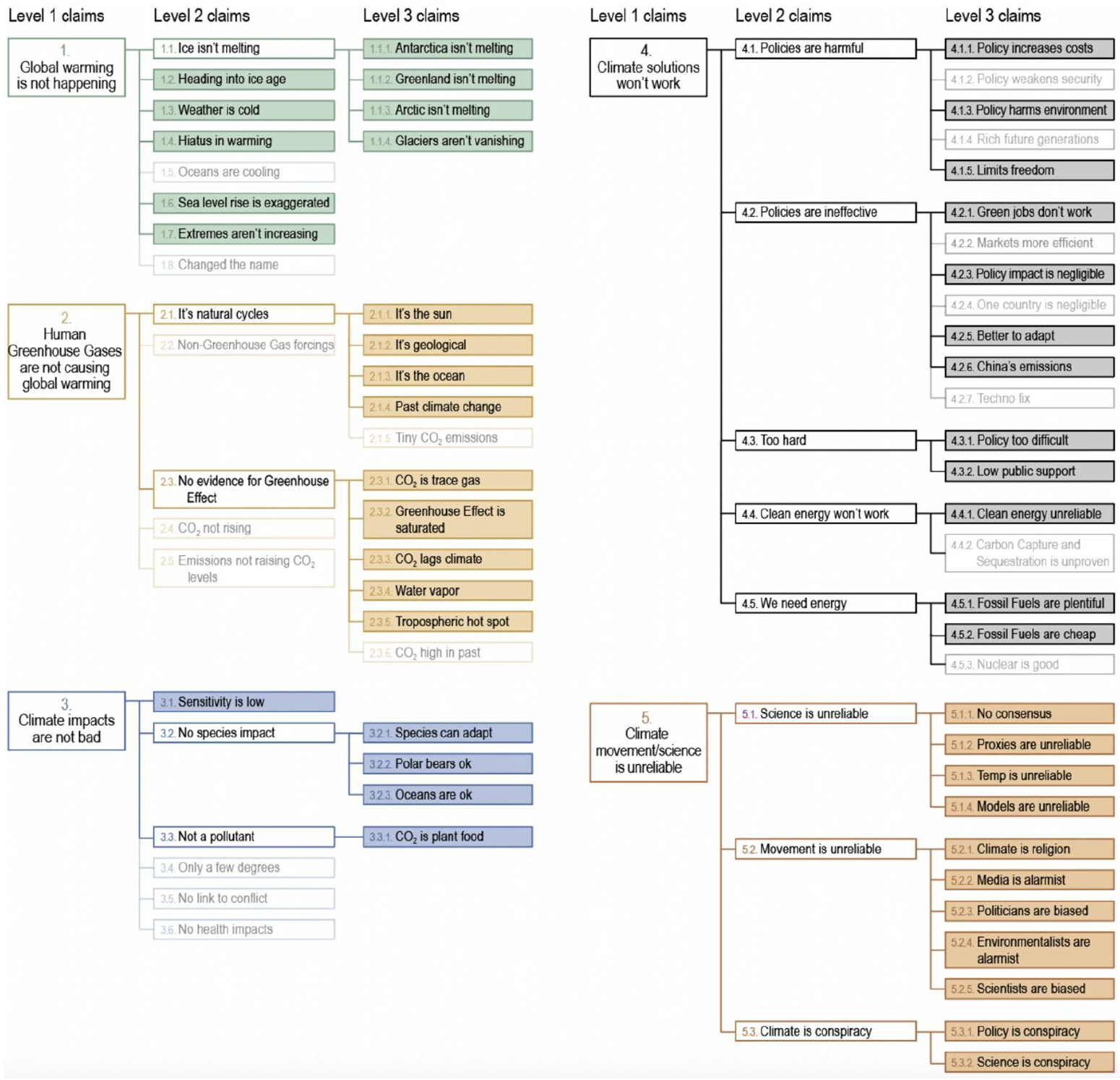
Figure 1: CARDS Taxonomy – Only “childless claims” (claims with no sub-claims) were deconstructed, indicated by solid color boxes. “Parent claims” (claims with sub-claims) were excluded from deconstruction, indicated by boxes with no coloured fill. All level 1 claims are parent claims, while all level 3 claims are childless claims. Grayed-out claims were excluded from this analysis due to insufficient example paragraphs.
The authors argued that there are a number of limitations to fact-checking. While science myths (like the bulk of the myths debunked by Skeptical Science) are ripe for fact-checking, other types of myths such as policy claims, conspiracy theories, and ad hominem attacks are more challenging. Fact-checking also struggles with arguments that contain hidden premises (or unstated assumptions) which are especially insidious because they can hide where the argument misleads.
They therefore proposed logic-checking as a complement—not a replacement!—to fact-checking. This involves identifying the presence of logical fallacies—an alternative way to tag arguments as misleading. One of the benefits of logic-checking is, that it can address forms of misinformation that fact-checking struggles with. It also has another benefit which will be mentioned later.
In 2018, John Cook worked with critical thinking philosophers to develop a step-by-step methodology for logic-checking. It involves deconstructing claims into an argument structure (one or more premises leading to a conclusion), then checking for hidden premises followed by examining each premise for logical fallacies (Cook et al. 2018):
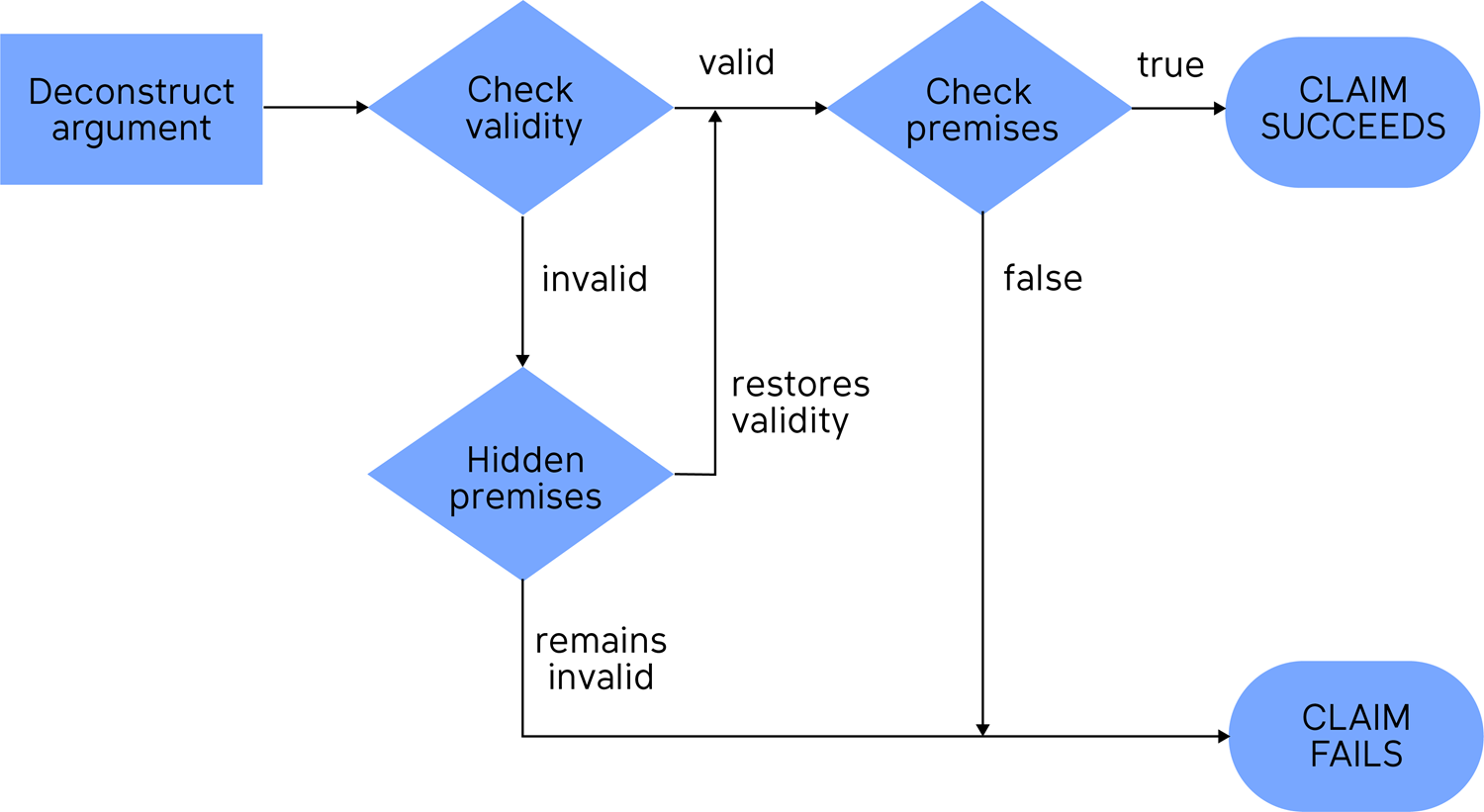
Figure 2: Simplified deconstruction workflow from Cook et al. (2018)
For this new paper, the authors expanded the 2018 flowchart to make it more practical, working with a variety of real-world misinformation. This was necessary because climate myths can come in a variety of flavours, so before they can be deconstructed, an exemplar version of each contrarian claim needed to be developed.
Exemplars were sorted into four types depending on how varied the arguments were within each claim. The first two types were where every version of the claim could be represented by the same argument. For example, the argument “CO2 lagging temperature disproves the warming effect of CO2” essentially always takes the same form. The third type was when a claim appeared in different forms but one argument dominated. E.g., the claim “Arctic isn’t melting” took various forms such as “there’s still lots of Arctic sea ice” but most of the time, this argument took the form “Arctic sea ice hasn’t significantly decreased recently.” The fourth type was when some versions of a claim was recategorised into other claims.
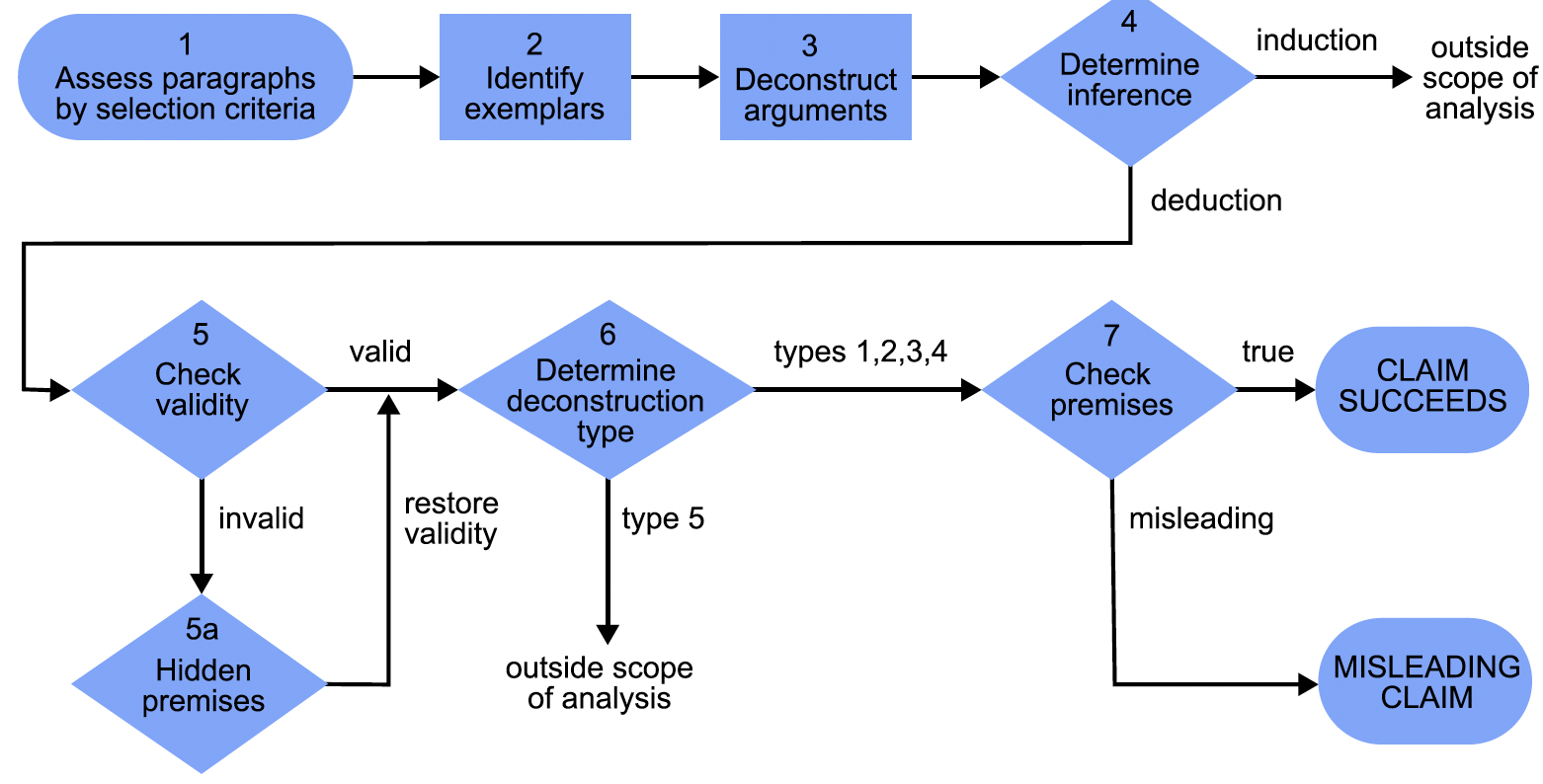
Figure 3: Deconstruction workflow from Flack et al. (2026)
They also clarified the differences between some fallacies that conceptually can be difficult to distinguish—such as cherry picking from slothful induction, and misrepresentation from oversimplification. Wendy Cook created this lovely infographic for the paper.
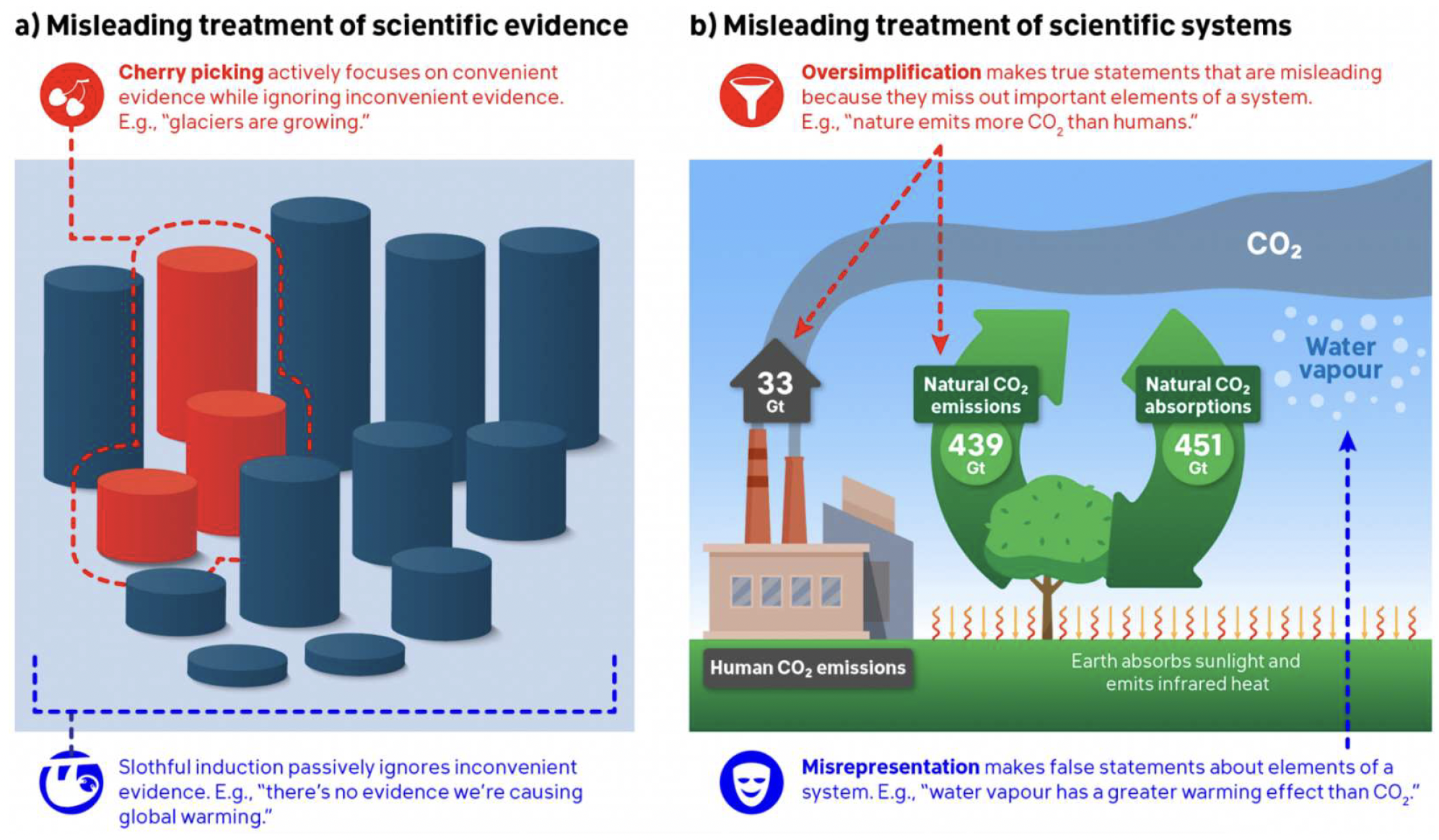
Figure 4: Infographic explaining two conceptually difficult to distinguish fallacies (from Flack et al. 2026)
The result of this work was a detailed summary of climate myths from the CARDS taxonomy, how each of them was deconstructed, any hidden premises in each myth, and ultimately the logical fallacies in each myth. This table is intended as a resource for anyone wishing to write debunkings of climate myths that use the fact-myth-fallacy format. A more detailed PDF-version of the deconstructed climate contrarian claims is available for download here.
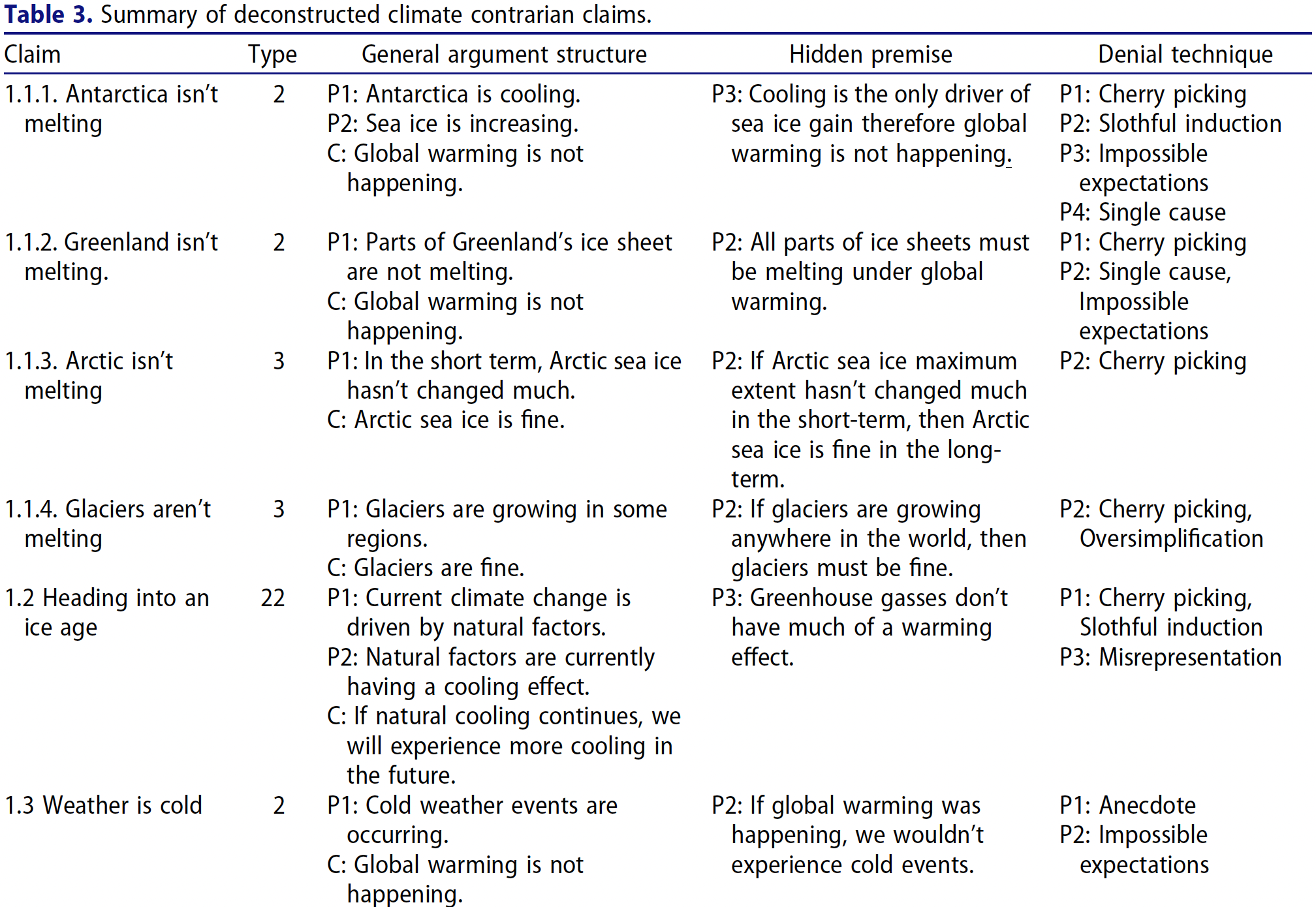
Figure 5: Sample from table 3 summarizing deconstructed climate contrarian claims (Flack et al. 2026)
The authors also identified the most common fallacies in climate misinformation. Slothful induction and cherry picking were the most common, followed by oversimplification and misrepresentation. Single cause (a form of oversimplification) came in fifth.
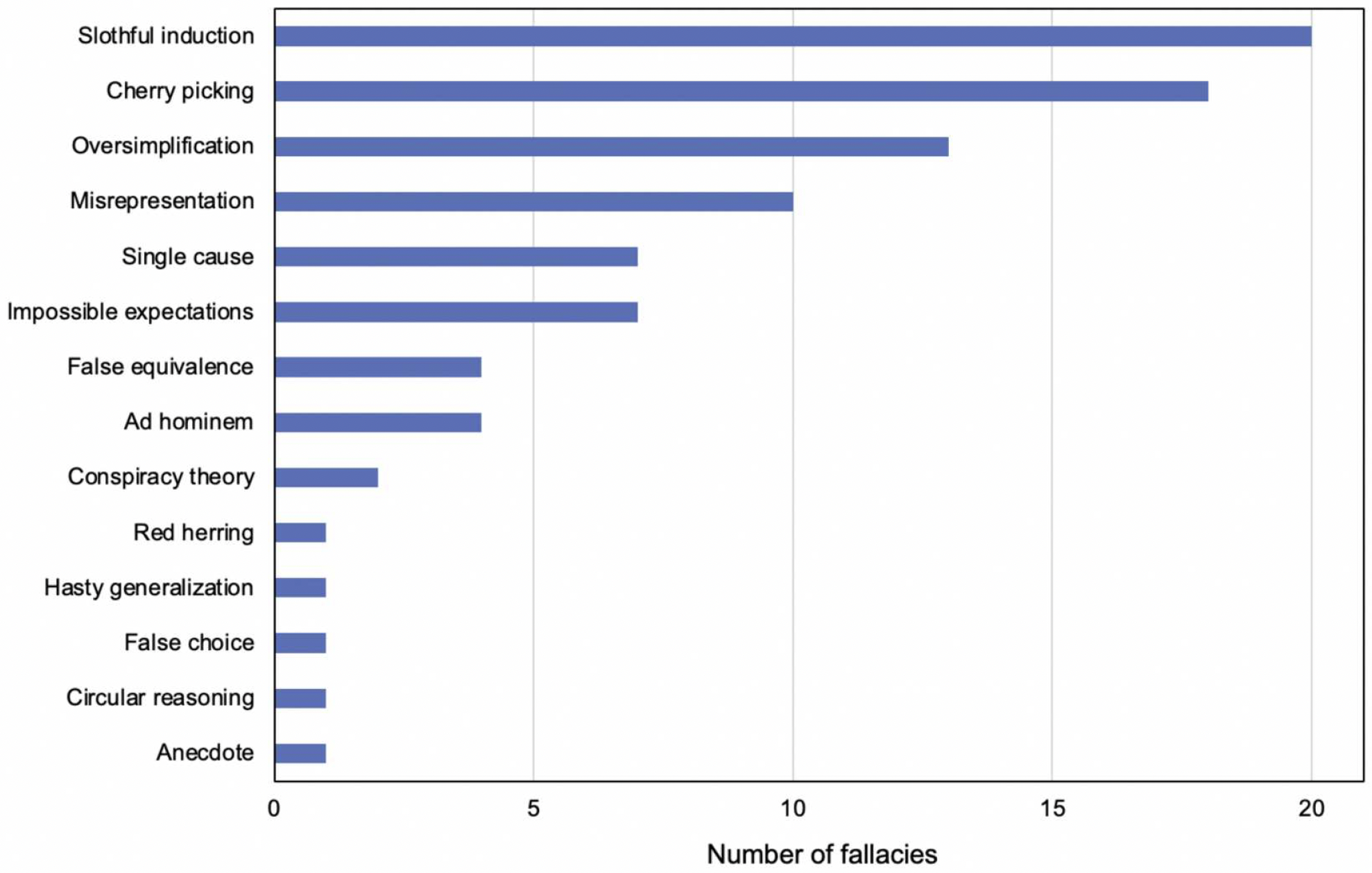
Figure 6: Bar chart of the most common fallacies in climate misinformation (from Flack et al. 2026)
One of the most significant findings was that 91% of the claims analysed contained hidden premises with fallacies. Almost all misinformation tries to hide how it misleads. This underscores the importance of logic-checking as an essential tool in countering misinformation.
Logic-checking segues seamlessly into logic-based corrections that explain misleading techniques in misinformation. In 2017, John Cook published research finding that logic-based corrections neutralise climate misinformation across the political spectrum. In other words, logic-checking depolarizes misinformation that otherwise has a polarizing effect on the public (Cook et al. 2017).
Bottom line: logic-checking is beneficial both epistemologically (help identify misleading content that fact-checking struggles with) and with communication (neutralising polarizing misinformation). Hopefully, this research will spark both more research and practical interest in logic-checking.
Reference:
Flack, R., Cook, J., Ellerton, P., Kinkead, D., Coan, T., Boussalis, C., … Dargaville, R. (2026). Identifying Flawed Reasoning in Contrarian Claims about Climate Change. Environmental Communication, 1–22. https://doi.org/10.1080/17524032.2026.2663476