


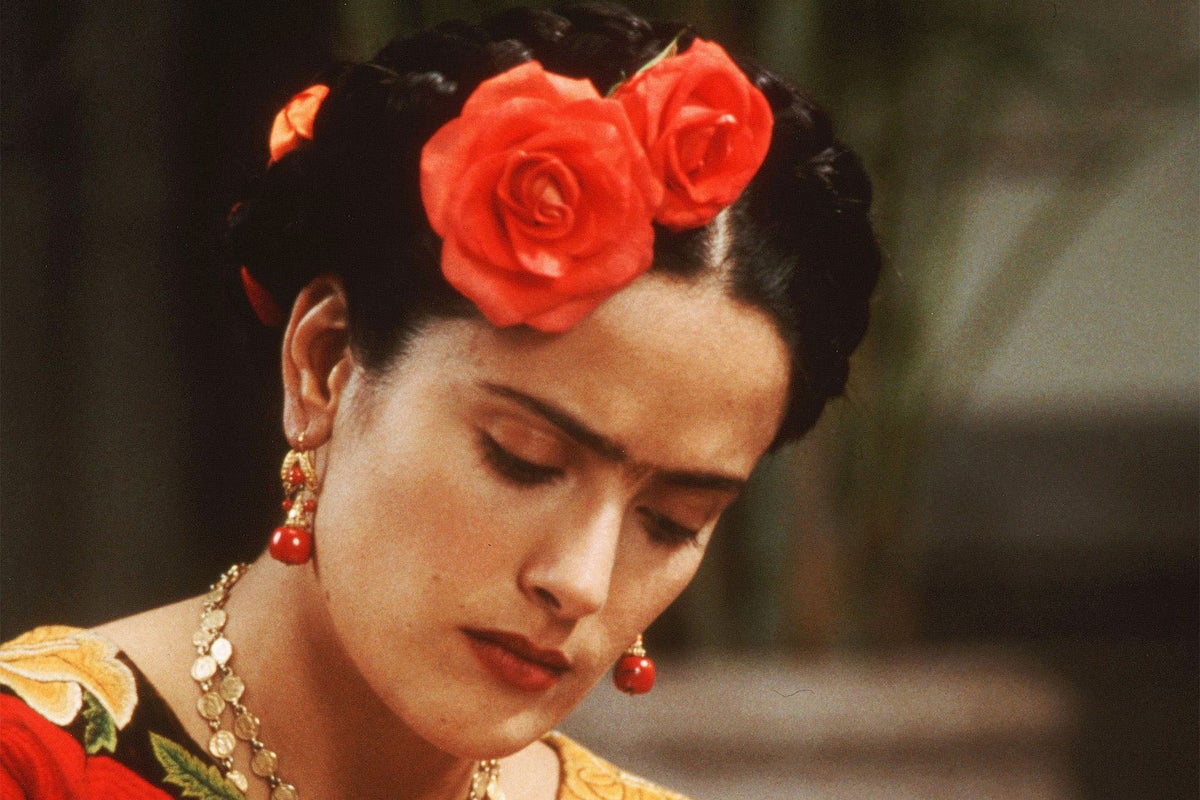
Harvey Weinstein wanted a particular kind of Frida Kahlo. He’d storm onto the set of a biopic he was financing about the Mexican artist, and lambast his star, the actor Salma Hayek. “Harvey complained about Frida’s ‘unibrow’,” Hayek recalled in 2017. “He insisted that I eliminate [Frida’s] limp and berated my performance.” He demanded Frida Kahlo be hot, essentially. That, he insisted, would help her sell.
In the 72 years since her death, Kahlo has indeed become something you can buy – she’s been loudly, if inelegantly, turned into a symbol of feminist, bisexual and disabled progressiveness, and become the go-to face for what could be considered elevated tat: venture onto Etsy today and you’ll find Frida-themed drink flasks, makeup cases, oven mitts, vases and hot water bottle covers. Theresa May once wore pictures of her face – her Marxist, anti-capitalist, gringo-hating face, I should add – on a bracelet. You can buy one of innumerable pairs of Frida-themed socks.
For International Women’s Day in 2018, Mattel launched their own Frida Barbie, to global horror – she was as skinny as a toothpick, noticeably pale-skinned, and missing her trademark unibrow.
Tate Modern’s new Frida Kahlo exhibition, titled The Making of an Icon, aspires to untangle Kahlo’s current image in the public eye, but ends up obscuring it further. Alongside just 33 original Kahlo artworks (a disappointment, frankly, when its 2005 retrospective included 80 of them) is a room devoted to all that aforementioned clutter, representative of what it calls “Fridamania”. It features “more than 200 objects generated by the mass-market production of Frida Kahlo merchandise”, explains a press release, “exploring [her] transformation into a global brand”. Ugh.
Reviews have been mixed – come for the honest, provocative, ever-remarkable art; be baffled by all the nonsense she unintentionally inspired.
As proof of Kahlo’s cultural staying power – or, if we’re being less generous, her queasy commodification – The Making of an Icon had the highest number of ticket pre-sales in Tate history. Everyone wants to see her work up close, or at least venture to the Tate shop right after to pick up one of its £16 Frida-themed floral headbands.
Kahlo would probably find all of this very amusing, or at least further evidence to support her visceral loathing of the uncultured masses. “The French are the most pretentious bores in the world,” she once wrote. “I’d rather sit on the floor in the market of Toluca selling tortillas than have to listen to the prattling of these ‘artistic’ bitches.” And another, for good measure: “I find that Americans completely lack sensibility and good taste. They are boring, and they all have faces like unbaked rolls.”
_1.jpeg)
This very funny savagery is noticeably absent from the ideas that most circulate around Kahlo, which is that she was stoic and blandly inspirational, impossibly chic, and liked to put flowers in her hair. It tends to avoid the rage she embodied, both as a woman and as an artist – her most affecting work unpicks her grief over miscarriage, her experiences of abortion, her hatred of capitalism, and her anger at her husband Diego Rivera’s infidelities. Her art was rooted in pain, Kahlo first putting paint to canvas while recovering from injuries sustained in a bus crash – she was impaled by an iron handrail, which led to her lifelong conflict with her own body. Fury, guilt, and ideas of rebellion and subversion flow through her work.
Both in her lifetime and in the aftermath of her death, battles have raged over how Kahlo should be represented. One newspaper article, published in The Detroit News in 1933, is shared often across social media. “Wife of the Master Mural Painter Gleefully Dabbles in Works of Art,” the headline blares, as it reports on the visiting great Rivera, and his missus doing her silly painting. When asked by art critic Florence Davies if Rivera had taught her how to paint, Kahlo replies, “No, I didn’t study with Diego. I didn’t study with anyone. I just started to paint. Of course, he does pretty well for a little boy, but it is I who am the big artist.” The piece essentially pats her on the head for trying.
But while you might assume things have gotten better since then, it’s evident that little has materially changed, when it comes to either Frida “the brand” or the works designed to celebrate her. Fridamania has its roots in the publishing of a biography by historian Hayden Herrera in 1983, which sent Kahlo’s reputation rocketing – numerous attempts were made in the next two decades to bring her story to life on screen, with Jennifer Lopez and Madonna (a superfan, and current owner of two original Kahlos) both at points attached to the role.
Which leads us back to Hayek’s Frida (or Weinstein’s, depending on who you ask). That film, too, wasn’t without its travails. Hayek’s experiences with Weinstein on 2002’s Frida – which included repeated requests by the disgraced mogul for showers, massages and sexual favours – were some of the most chilling from the deluge of Weinstein stories that emerged in the early days of #MeToo. But they also helped to explain why Frida is as weird as it is, why its copious nude scenes felt quite so incongruous, and why Kahlo herself often seems to disappear within her own movie, a woman whose art comes secondary to the story of how she was tossed between Rivera (as played by Alfred Molina) and her lover, Leon Trotsky (Geoffrey Rush).
Today, it could be considered ground zero for the contradictions that surround Kahlo in the public eye: Hayek wanted to depict her accurately; Weinstein wanted the sexy, sanitised, more Oscar-friendly idea of her. Neither totally got their way, and you can tell.
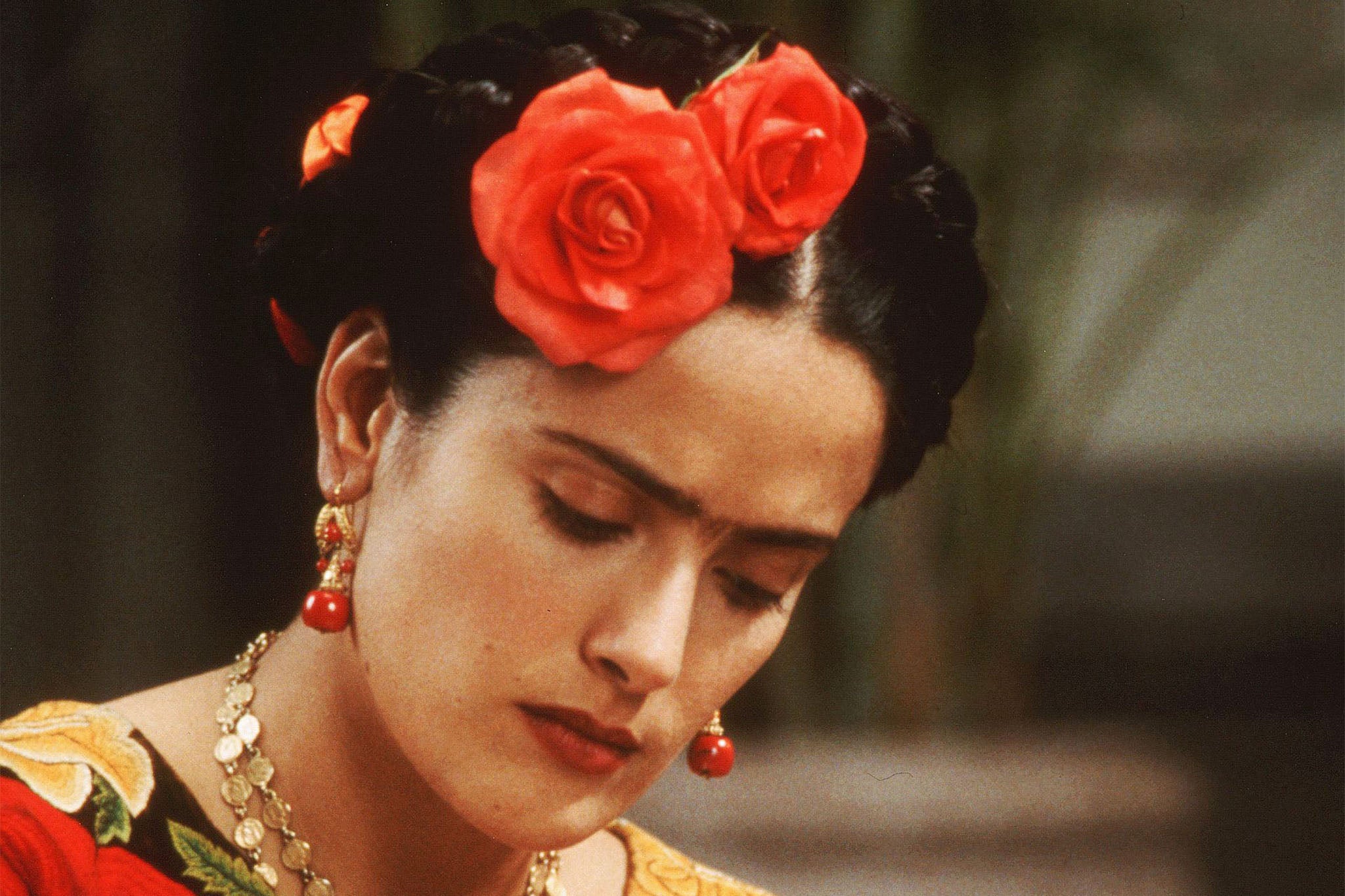
Writing in The New York Times in 2017, Hayek alleged that Weinstein, the film’s biggest financial backer, had punished her for rejecting his advances – first by threatening to pull out of the film, then by obsessively meddling with it during shooting. “He told me that the only thing I had going for me was my sex appeal and that there was none of that in this movie,” she wrote. “So he told me he was going to shut down the film because no one would want to see me in that role.”
Molina remembered this, too, telling The Independent in 2022 that Weinstein would quite literally complain to him that Hayek was disappearing into the role. “What he was talking about, of course, was she wasn’t playing ‘sexy’,” Molina recalled. “She wasn’t playing this gorgeous Latina, this hot tamale. She was playing Frida.”
Hayek wrote that she was drawn to Kahlo as she had “the courage to express herself while disregarding skepticism”. She was desperate to dramatise the artist’s story with dignity and in ways that “combated stereotypes” about their mutual homeland of Mexico. Weinstein, meanwhile, “had been constantly asking for more skin, for more sex”. He wanted her to film a nude love scene with another woman, and to perform full-frontal nudity, she alleged.
“It was clear to me he would never let me finish this movie without him having his fantasy one way or another,” she wrote. “There was no room for negotiation. I had to say yes.” She added that she’d had a “nervous breakdown” while filming the sex scene in question.
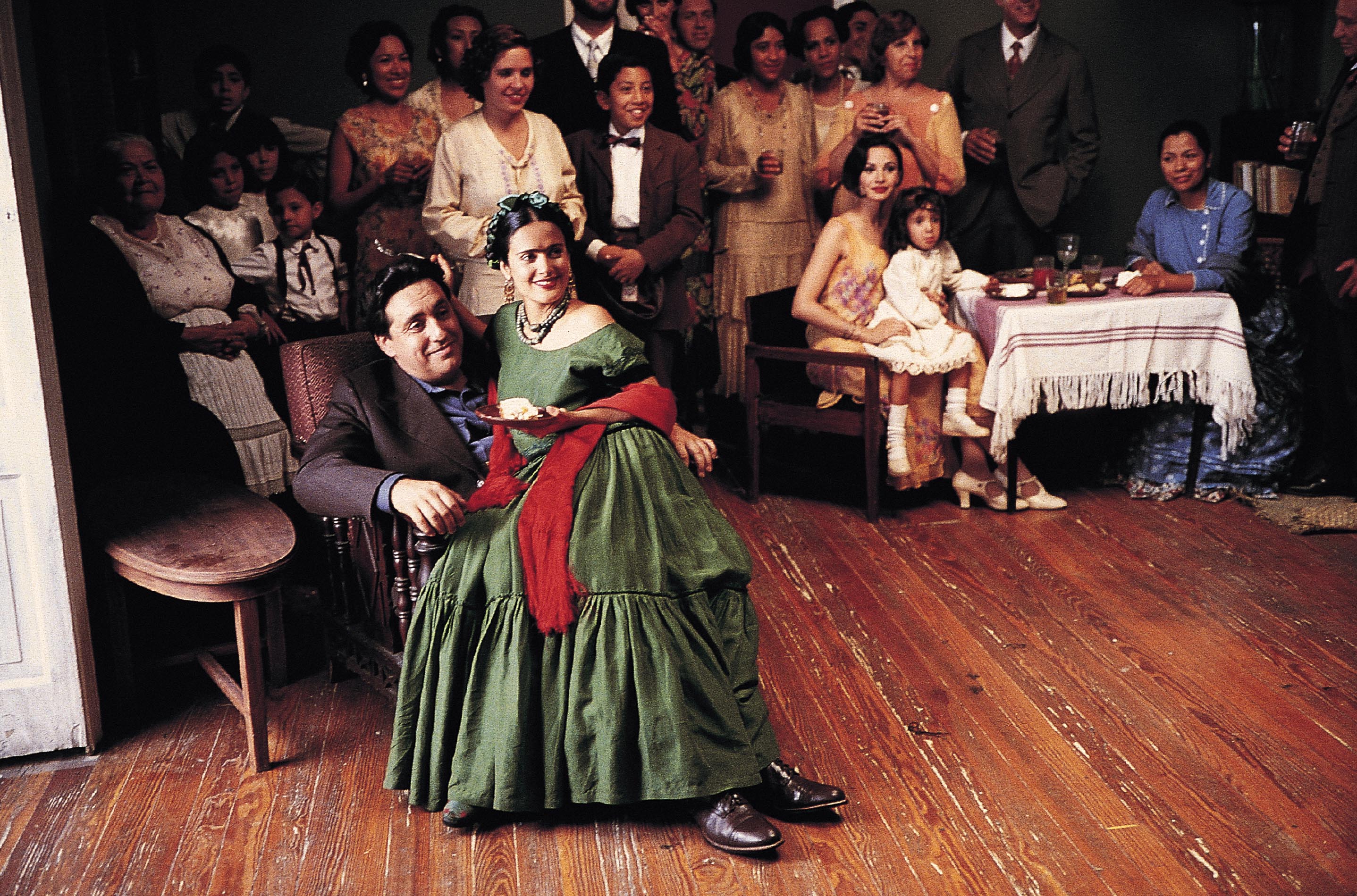
The film’s director, Julie Taymor, had her own battles with Weinstein, revealing in 2020 that the pair had ended up locking horns in the editing suite once production had wrapped. She was able to duck and dive around him. “I had a relationship with Harvey where I was able to make him like me. He loved battling Quentin [Tarantino]. He loves battling men. He couldn’t stand women who come up strong against him. So I didn’t. It was through certain kinds of cajoling and joking [that I challenged him].”
Frida ultimately earned Hayek an Oscar nomination in 2003, and reviews were largely kind. Hayek wrote of being pleased with its success, but that she remained traumatised by the experience overall – particularly because it took years for Weinstein to acknowledge that the film was any good. “When I saw him socially, I’d smile and try to remember the good things about him, telling myself that I went to war and I won,” she wrote. “But why do so many of us, as female artists, have to go to war to tell our stories when we have so much to offer? Why do we have to fight tooth and nail to maintain our dignity?”
I wish I could say that Hayek won creatively, but Frida is a frustratingly milquetoast experience when viewed today – particularly under the shadow of the big, relentless Frida Kahlo brand. Hayek’s Kahlo is caught between two pillars that never quite align, just as every other depiction of Kahlo in the years since has been. On one side is an artist far too radical and unvarnished for the mainstream. On the other is a mainstream determined to sand down the edges of said artist until she’s able to be more easily sold – still recognisable, still admirable and brilliant, but without much left of her soul.
‘Frida: The Making of an Icon’ is at Tate Modern until 3 January 2027; tickets here