


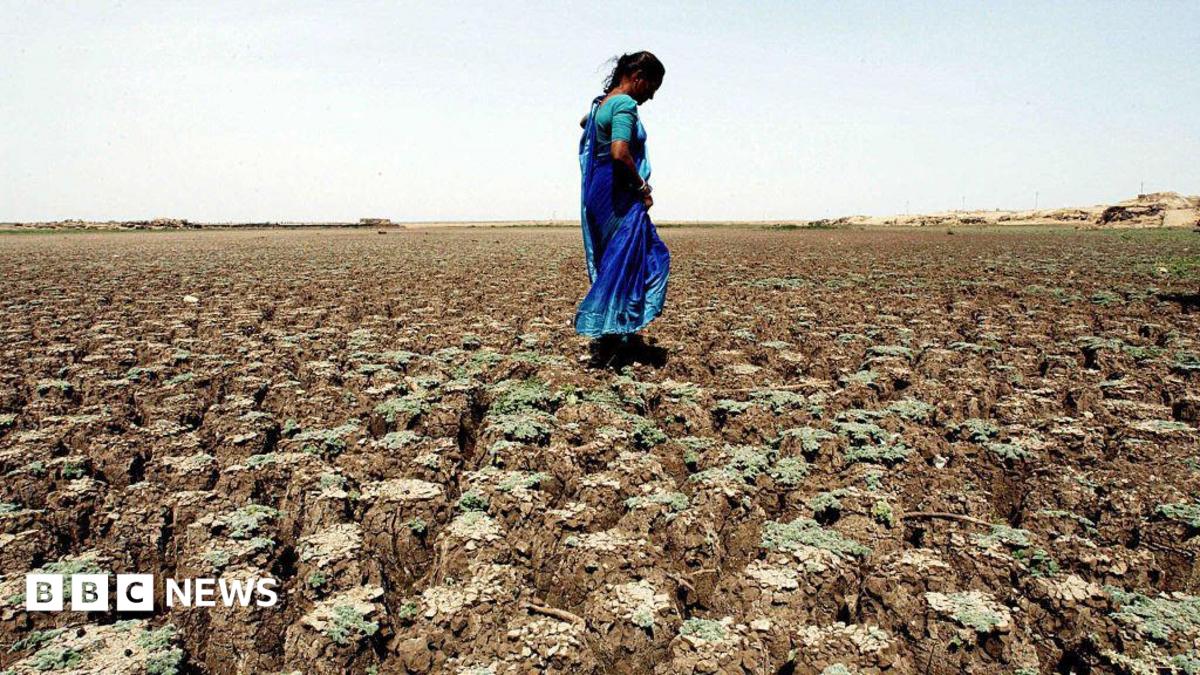
India has recorded its driest June in 12 years, and the fifth-driest since nationwide rainfall records began in 1901, according to the country’s weather department.
The India Meteorological Department (IMD) has also forecast below-normal rainfall for July, raising concerns over the progress of crop sowing this year.
Government data shows the area planted with summer crops until the end of June is down by nearly 23% from the corresponding period in 2025, with rice sowing falling by a quarter.
Millions of farmers rely on seasonal monsoon rains to sow their crops and a shortfall or delay significantly affects their output.
Data released by the federal agriculture ministry showed farmers had sown summer crops across 18.27 million hectares till 30 June, down from 23.65 million hectares during the same period last year.
India’s main summer crops include rice, pulses, coarse cereals, oilseeds, cotton, sugarcane and jute. These crops depend heavily on the southwest monsoon, which normally provides about 70% of India’s annual rainfall.
The rainy season usually reaches the southern state of Kerala around 1 June before moving northwards across the country.
This year, the onset was delayed by three days and the monsoon’s advance slowed for around two weeks across parts of western India, delaying field preparation and planting in several agricultural regions.
Rice planting has slowed more sharply. Farmers have planted the crop on 2.58 million hectares so far this season, compared with 3.44 million hectares a year earlier – a fall of about 25%.
Nearly half of the country’s net sown farmland has no assured irrigation and depends largely on rainfall, making the timing and spread of the monsoon critical for millions of farmers.
Experts say poor monsoon rains will also reduce domestic oilseed production, increasing the country’s reliance on imported edible oils.
To be sure, the eventual impact on harvests remains uncertain. The monsoon season continues until September, leaving time for rainfall to recover and farmers to make up some of the delayed sowing.
India also entered the season with record rice stocks in government warehouses.
Official data showed government rice stocks stood at 39.7 million tonnes on 1 July, nearly three times the official buffer requirement of 13.5 million tonnes, providing a cushion against any short-term disruption in supplies.
A further 29.8 million tonnes of rice is expected to be added once paddy already procured from farmers is milled.