


Texas isn’t an outlier. It’s an early signal of where AI infrastructure policy is heading.
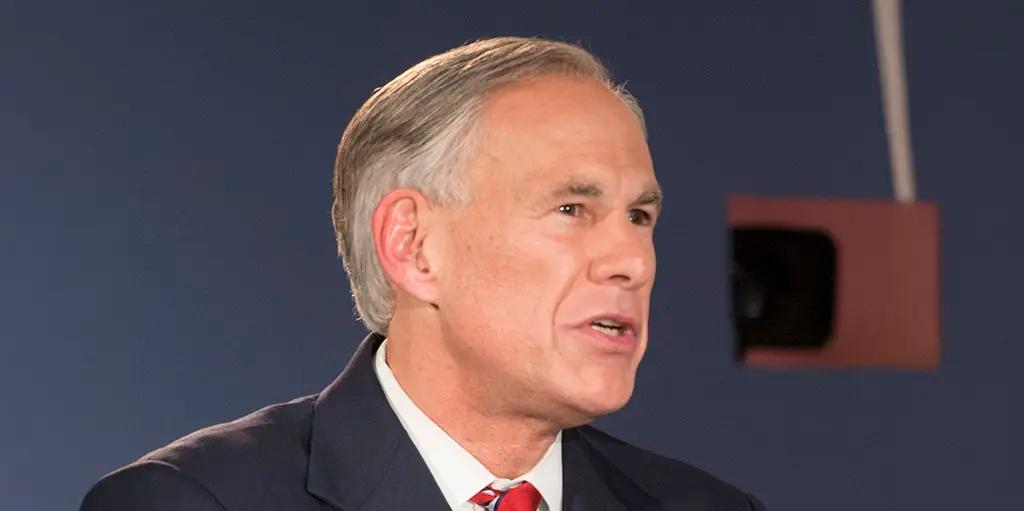
Gov. Greg Abbott didn’t call it a moratorium. He called it a “comprehensive verification and audit.” But for the roughly 2,000 data center projects now sitting in the Electric Reliability Council of Texas’s interconnection queue, the practical effect is much the same: projects cannot meaningfully move forward until the review is complete. Whatever label Texas chooses, that’s a pause in all but name.
This matters beyond Texas because other states are likely to watch what happens next. Six weeks earlier, New York Gov. Kathy Hochul imposed a year-long pause on construction of the largest data centers and took a very public hit from President Trump for doing it. Abbott, a Republican governor in the country’s second-largest data center market, has now arrived at a remarkably similar place without ever using the word “pause.” That a blue-state governor and a red-state governor have converged on the same instinct tells you this is no longer a partisan fight over whether AI infrastructure should exist. Instead, the debate is maturing. States increasingly want more visibility into what they’re approving before they approve the next wave of projects. The question is shifting from whether to build AI infrastructure to how states should govern it.
That instinct is legitimate. Texas has concluded it doesn’t have enough information to evaluate the cumulative impact of what’s sitting in the queue. Regulators have struggled to get consistent information about projected power demand, water use, and the interaction between tax incentives and infrastructure planning. That isn’t necessarily because developers are withholding information. It’s because permitting and interconnection processes were built for an era of individual industrial facilities, not hundreds of gigawatt-scale projects arriving within a compressed period of time. That’s a systems problem, not an indictment of any developer or operator. Closing that information gap is a reasonable goal, and an audit is a reasonable way to pursue it.
But reasonable goals still have costs, and that’s the part of the conversation many states are skipping.
Start with the communities waiting on these projects. Many of the towns and counties with facilities in the queue are counting on the tax base, jobs, and infrastructure investment tied to a specific development timeline. A review process without a clearly defined endpoint doesn’t just delay approvals. It delays those benefits as well, creating real costs for communities that expected investment to arrive on a predictable schedule.
Then consider the capital behind these projects. Financing commitments, land options, power purchase agreements, and orders for transformers and other long-lead equipment don’t simply wait while regulators deliberate. Every month of uncertainty gets priced into the next deal, either through higher financing costs or through decisions to deploy capital in jurisdictions that offer greater regulatory certainty.
This is where an open-ended audit can run counter to its own purpose. The developers most exposed aren’t speculative operators with little to lose. They’re the companies that have already invested significant capital, secured land, worked with local communities, and committed to long-term development. States often say they want to reward responsible developers while discouraging speculative projects. But without a timely review process, an audit can have the opposite effect, imposing the greatest costs on those with the deepest commitments while allowing less-invested operators to simply wait or move elsewhere. If the goal is to encourage orderly, community-engaged development while discouraging speculative proposals, the timeline matters just as much as the audit itself.
The ripple effects extend well beyond developers. Utilities plan transmission upgrades around expected demand. Construction firms allocate labor months in advance. Equipment manufacturers schedule production years ahead. When project timelines become indefinite, that uncertainty propagates throughout the infrastructure ecosystem. For time-sensitive projects, a prolonged pause can have many of the same practical consequences as a canceled one.
None of this is an argument against scrutiny. If anything, a well-designed statewide review process could prove more durable than the patchwork of county-level fights Texas has already experienced…from Hood County’s failed effort to Hill County’s moratorium and the litigation that followed its rescission, to San Marcos’ local restrictions. Those approaches have been ad hoc, politically volatile, and frequently challenged in court. A clear statewide framework could replace that uncertainty with something more predictable for everyone involved.
But could is doing a lot of work in that sentence, and Abbott’s directive doesn’t yet clear that bar. A durable audit regime needs a defined scope, published timelines, transparent evaluation criteria, and clear treatment for projects already substantially underway. Without those guardrails, the distinction between an audit and a moratorium becomes largely semantic.
The real test isn’t whether Texas audits these projects. It should. The test is whether the state uses that audit to build a predictable regulatory framework or simply creates an open-ended permission slip for delay. Investors can price regulation. Communities can plan around regulation. What neither can price nor plan around is uncertainty. And that’s ultimately what Texas risks creating if this pause remains a process without a predictable end.
Joseph Hoefer is Chief AI Officer & Principal Monument Advocacy.
This article was originally published by RealClearEnergy and made available via RealClearWire.