


Essay by Eric Worrall
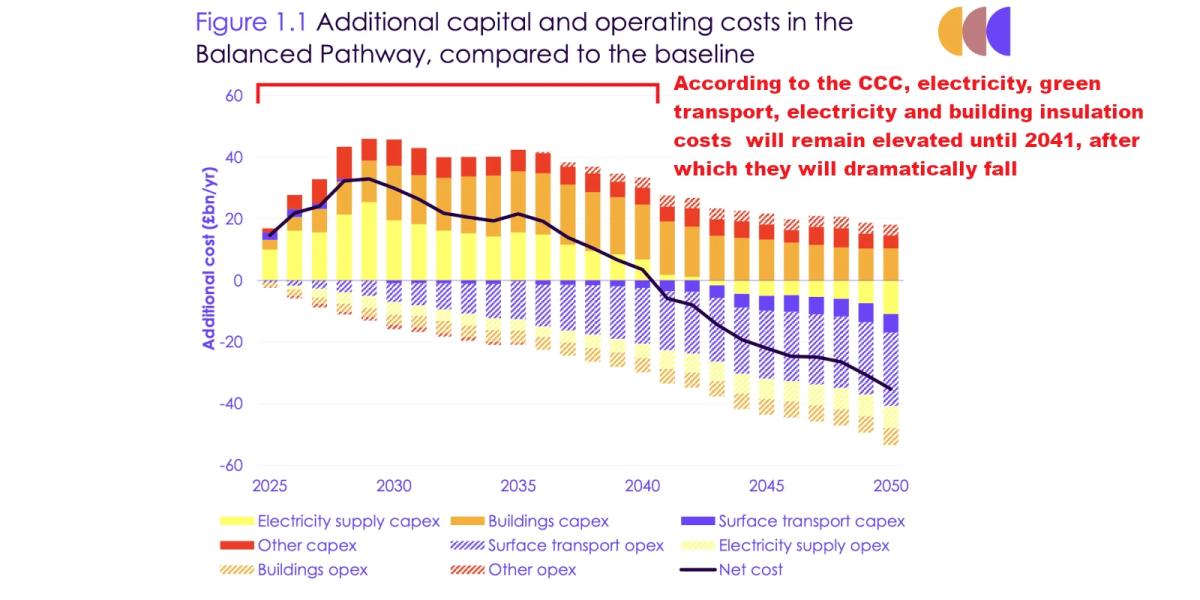
Apparently UK Net Zero to 2050 will only cost £100 billion (US $134 billion), or £4 billion / year. But a lot of the money has to be spent upfront.
Reaching net zero by 2050 ‘cheaper for UK than one fossil fuel crisis’
Climate change committee finds move to renewable energy would also bring health, economic and security benefits
Fiona Harvey Environment editor
Wed 11 Mar 2026 17.00 AEDTAchieving the UK’s net zero target by 2050 will cost less than a single oil shock and bring health and economic benefits while insulating the country against future costs, the government’s climate advisers have forecast.
Eliminating the UK’s reliance on fossil fuels by adopting renewable energy and green technologies, such as electric vehicles and heat pumps, would be the best and most cost-effective option for the future economy, the Climate Change Committee (CCC) found.
Doing so would prevent the kind of shock that consumers are experiencing from the Iran war, which has sent the cost of oil and gas soaring to levels not seen since Russia’s invasion of Ukraine in 2022.
Reaching net zero would cost about £4bn a year, the CCC found, or close to £100bn by 2050, which was roughly equivalent to the energy-related costs of the fossil fuel shocks that followed Russia’s invasion of Ukraine.
The findings contradict widespread claims made by rightwing thinktanks and populist politicians including the Reform party that net zero would represent a crippling cost of £9tn to the UK’s economy. As well as exaggerating costs, these estimates failed to take into account the cost of paying for the fossil fuels needed for energy if we do not reach net zero.
…
The CCC report “Supplementary analysis of the Seventh Carbon Budget” is available here.
Although the £4 billion / year figure is mentioned in the Guardian article, much of the expenditure is front loaded, as you can see from the graph above.
HOWEVER, the report also makes use of alleged benefits, such as health benefits from not breathing in polluted air. The report claims once you take these benefits into account, the benefits start accruing from 2029.
The report appears to lean heavily into unproven technologies such as carbon capture and storage, and the dubious benefits of biomass – chopping down US forests and shipping them to UK so they can be burned in converted coal plants.
My biggest problem with the report is it is light on detail. I delved into the charts and numbers spreadsheet, and from a quick glance it looks like they haven’t shown any of their working out – its all just precalculated numbers.
In my opinion, in the absence of detailed calculations, the conclusion are absurd. And the document admits lots of uncertainty – “Although there is a high degree of uncertainty around future costs, there is some research to suggest these cost pressures may ease in the medium to long term.49 Additionally, opportunities for cost reduction through innovation, economies of scale and learning-by-doing remain, reflected in our assumed learning rates.“
In addition, the failure of the report to show how energy storage is supposed to work in a future of intermittent power supplies, and how much it will cost, in my opinion reduces the quality of the report to political fluff – because the cost of energy storage required to support the UK during prolonged 9 day wind droughts such as happened in 2018 would be prohibitive.
The report authors appear to be assuming “assumed learning rates” innovation magic will bring the costs down in line with their expectations. Over to you engineers.
The UK has already spent well in excess of £100 billion on Net Zero, and gotten nowhere – the only carbon reductions are from heavy industry which has been chased offshore and off the books, so the UK government can claim emissions reductions while importing those carbon emissions from nations like China – high carbon products which the UK used to manufacture.
If there was a way to force greens to commit to say spending £100 billion and seeing where it got them, followed by an honest admission it was a flat bust, I would be all in favour of doing it. But like the estimates in the report, in my opinion greens are as slippery about the cost of Net Zero as they are about some of their other policy ideas.