


By P Gosselin on 24. February 2026
The Sahara Desert has shrunk, satellite images confirm…evidence of a real ecological shift
For decades, the narrative surrounding the Sahara was one of unstoppable desertification—a vast, arid landscape slowly swallowing everything in its path, including Europe alarmists have warned.

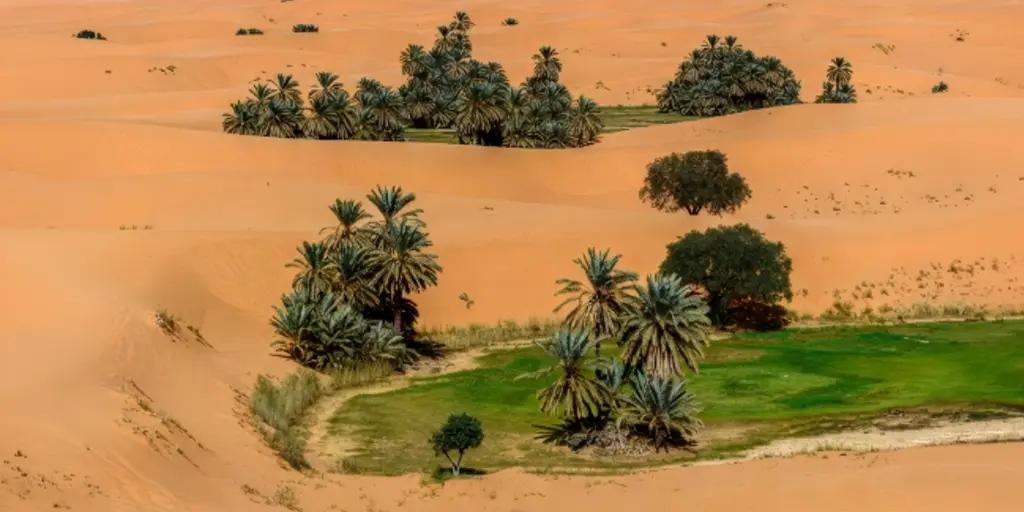
Symbol image generated by Grok AI
However, recent scientific findings are painting a much more hopeful and complex picture. Thanks to advanced satellite technology and Artificial Intelligence, researchers have discovered something remarkable: The edges of the Sahara and the Sahel zone are becoming significantly greener.
A real ecological shift
In the past, satellite imagery was often too “blurry” to detect individual trees in arid regions. Sparse vegetation was frequently overlooked, leading to an underestimation of the actual biomass.
By using high-resolution satellite data and deep-learning algorithms, scientists have now been able to count individual trees and shrubs. The results are stunning: there are billions of trees in areas previously thought to be mostly barren. This isn’t just a correction of old data; it’s evidence of a real ecological shift.
Why is the Desert Greening?
Several factors are driving this “greening” effect at the world’s largest hot desert. Firstly, in certain regions of the Sahel, precipitation levels have risen over the last few decades.
Scondly, the CO2 Fertilization Effect: While rising CO2 levels are claimed to be a major driver of climate change, they are definitely a potent fertilizer for plants. Higher CO2 concentrations allow trees to use water more efficiently. They can keep their pores (stomata) partially closed to prevent evaporation.
Thirdly, shifts in how often fires occur in these regions have allowed young saplings to reach maturity instead of being destroyed in their early stages.
Why Does This Matter?
This findings have profound implications for our planet: More trees mean more carbon dioxide is being pulled from the atmosphere. Trees provide shade, reduce soil erosion, and help retain moisture in the ground, making the environment more livable for local communities.
Moreover, a greener landscape supports a wider variety of insects, birds, and mammals, strengthening the local ecosystem.
This reminds us that nature is resilient and that our understanding of the Earth’s ecosystems is constantly evolving. The desert is not just a place of sand and heat—it is a place of hidden life, slowly reclaiming its ground.