

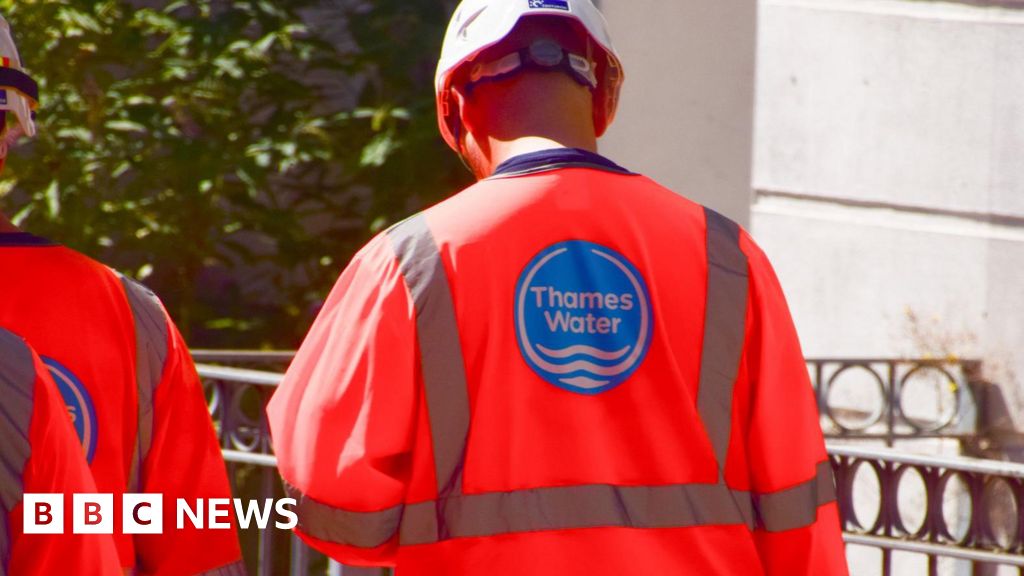
Thames Water is running out of time to secure a rescue deal as its debt swelled to nearly £20bn.
The UK’s largest water and waste company returned to profit after increasing customer bills in April.
The company has enough cash to last until early next year but if a deal is not approved, it could collapse into government-supervised administration.
A controversial restructuring plan from a group of its lenders is still under intense discussion with the regulator Ofwat and the Department for the Environment.
Thames has the option to ask its creditors for another emergency cash injection which would last for all of 2026, but they would only agree to this if a rescue deal is approved.
The company has faced heavy criticism for struggling to fix leaks, stop sewage spills and modernise outdated infrastructure.
Regardless of what happens to Thames or who owns the company, its water services will continue as normal.
The company warned in its half-year results there was still a “material uncertainty” over whether the deal would be secured.
The government has already selected administrators to step in if required.
The proposed deal from a consortium of Thames’s main creditors, named London & Valley Water, would see them pump investment into the utility and write off debts in return for more lenient performance targets.
They would write off a quarter of the money they are owed, with a smaller group of junior lenders’ loans written off completely.
The BBC understands that the group is hopeful their plan will get agreement in principle before the end of the year.
But the plan has many critics over the proposed leniency on fines for pollution and spillage.
London & Valley Water insists that allowing Thames to fall into administration will leave it in limbo, where its many problems will deteriorate.
Customer complaints have nearly doubled since last year, the majority of which concern bill hikes.
Thames hiked its bills by 40% in April. It increased the number of customers on social tariffs, which was funded by other customers’ bills.
Chris Weston, Thames Water’s chief executive, said in the company’s half-year results that “bill increases have been significant this year, and I recognise the difficulties this creates for many”.
“A market-led solution clearly remains the best option for our customers, the environment, taxpayers and the economy,” he said.
It said in July that it would take at least a decade to turn the company around.
In May, it was handed a £122.7m fine, the biggest ever issued by the water industry regulator Ofwat, for breaching rules on sewage spills and shareholder payouts.