


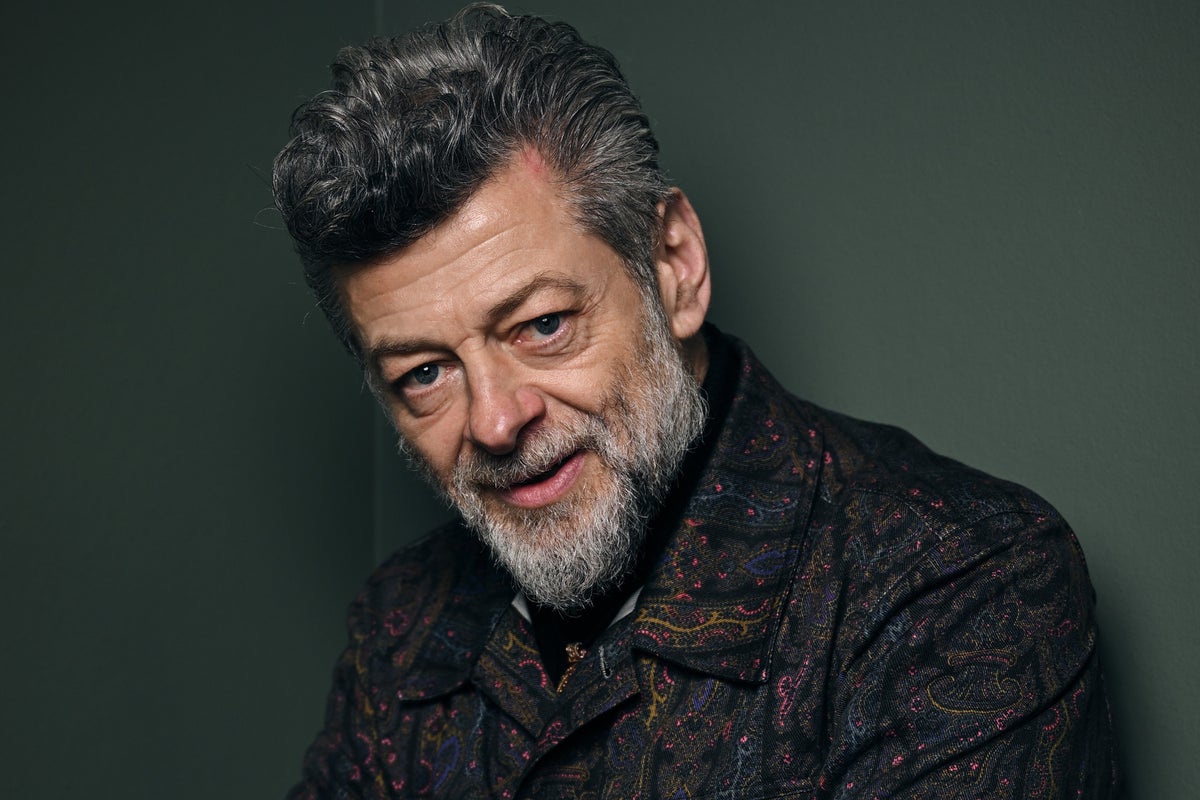
George Orwell wrote Animal Farm in 1944, at the height of the Soviet-Western alliance, as a grave warning against making friends with Stalin. He satirised the rise and fall of the Russian revolution through the eyes of barnyard animals, allegorising the Kronstadt rebellion, the Moscow trials, the Molotov-Ribbentrop pact, the Tehran conference. Animal Farm is a polemic about moral degradation and the corruption of truth. It is full of timeless wisdom and political insight. Not many fart jokes, though.
For the actor and director Andy Serkis, better known perhaps as Gollum in the Lord of the Rings saga or Caesar from the new Planet of the Apes films, the sound of freedom in his new children’s adaptation of Orwell’s novella is a loud, long PPRRRRTTT expelled from the backside of a pot-bellied pig voiced by Seth Rogen. Not a classic take on the text, then – but if toilet humour is what it takes to engage a young audience in Orwell’s cautionary message, then so be it. Not everyone agrees.
“It’s interesting how the film did in the States, which was… not well,” laughs Serkis, 62, over video call; his face – so often obscured by graphics; sometimes he’s an ape, other times a cave-dwelling hobbit – is lit up by his laptop screen. “It was not received particularly well, seemingly because of the polarised situation that the States seems to be in at the moment.” The trailer alone sparked controversy, racking up 11 million views and a load of vitriol when it debuted last year. People accused Serkis of watering down the original, sapping its potency. Orwell would be turning in his grave, was the general consensus. “Talk about starting a debate,” grins Serkis. “I mean, it was more like a culture war.”

He perhaps poured gasoline on the fire when he wore a bright red Trump-inspired cap reading “Make Animal Farm Fiction Again” to the film’s US premiere back in April. “Well, yes, that was in the spirit of the film without being too…” he laughs, trailing off. “We opened theatrically in the States first and so it felt like that was pertinent for that audience.” Later in our conversation, Serkis laments that the “culture war” of it all has dissuaded parents from taking their kids to see the movie – “which is what we’re trying to avoid this time around, so we’re approaching the marketing in a slightly different way”. That way, “parents will hopefully ignore the vehemence of the online assassination”.
The marketing plot may go some way in explaining why Serkis is being uncharacteristically coy this morning – speaking in vaguer terms than usual about dictators and despots around the world. No naming, no shaming. (The Cybertruck-looking car driven by Animal Farm’s billionaire villain was designed long before Elon Musk’s controversial vehicles hit the road, Serkis has previously clarified.) And it’s true that while Orwell’s story is specific to Soviet-era politics, its themes of power, corruption, and the wilful ignorance of the masses seem to be ever-present; timely and timeless.
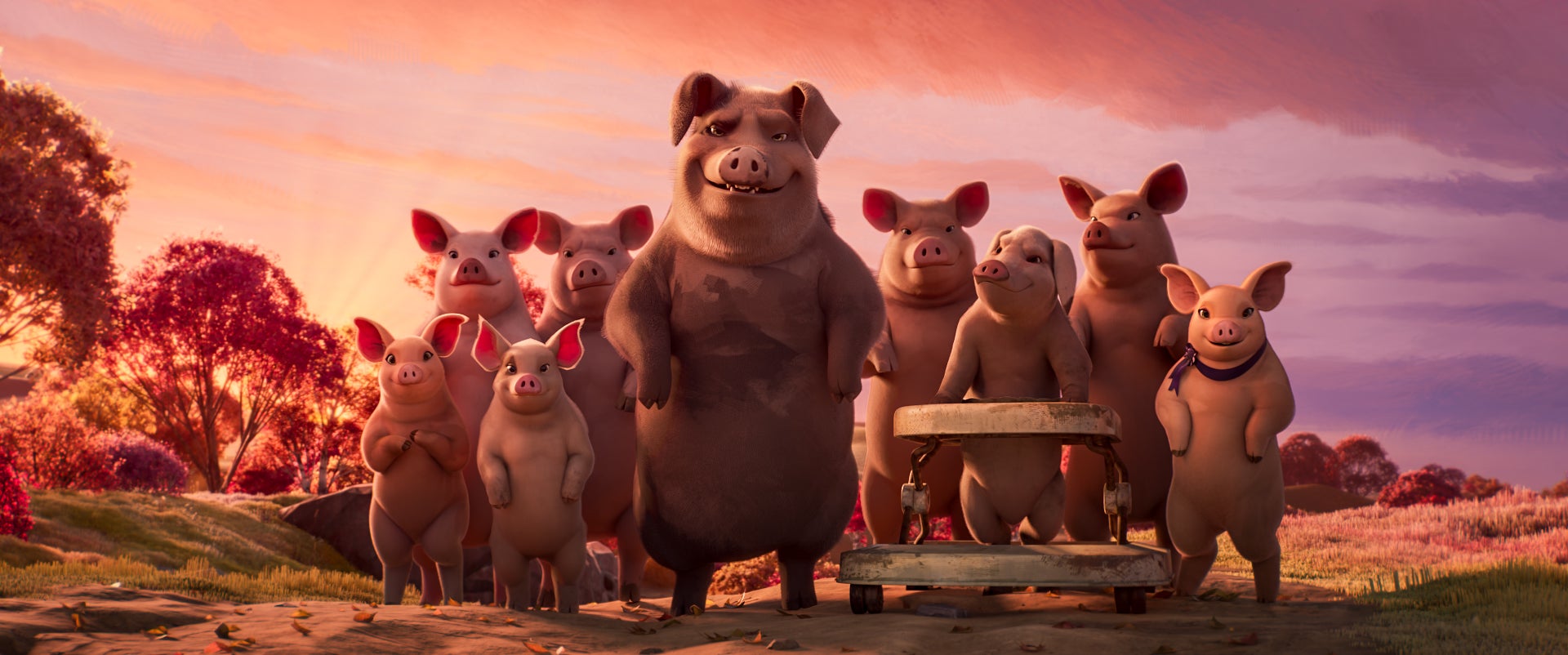
“Orwell was very prescient when he was writing as an anti-authoritarian,” says Serkis. “I guess he knew that it would always be a relevant piece of literature for any age group at any time. Strangely, even in the time since I started on the project, it has become more prescient – particularly the destruction of truth, the capacity for power to corrupt, and, you know, leaders not particularly listening to the people that put them there, or leaders who have been in power for generations. It bizarrely feels very timely and relevant, but I’m sure it will be equally as timely and relevant in 10, 20, 30, 40 or 50 years’ time.”
The book’s enduring relevance is depressing, of course – but useful in the case of Serkis’s film, given it took over 15 years to make. It had been on the set of Rise of the Planet of the Apes in 2010 that he came up with the idea: “We were filming this one scene: Caesar, my character, is leading a rebellion and they break out of this facility where they’ve been treated very badly and I thought, ‘Gosh, no one has made a version of Animal Farm for years now.’” He had originally conceived it to be motion-capture like Apes, but in the end decided that a photo-realistic horse with the voice of Woody Harrelson being trotted off to the glue factory would be a shade too dark for kids.
Whether they’ve had their face scanned or not, anyone’s image can be put into terrible positions of being exploited or used in nefarious ways
On paper, Animal Farm sounds like an easy sell. It’s a world-famous story with a world-famous director and a world-famous cast (in addition to Rogen and Harrelson, Laverne Cox, Kieran Culkin, Steve Buscemi, Glenn Close, and Jim Parsons all lend their voices). In reality, it struggled to find a studio. Serkis has said the reluctance was a marketing issue: Orwell for kids is not the easiest thing to pitch. But he persevered, and he isn’t about to let some keyboard critics dampen the mood.
More interesting to Serkis than the debate raging in the comments section of a YouTube trailer is the one he hopes will unfold around family tables at dinner time. “What’s more important to me is that schoolchildren can sit around and discuss it, or talk with their parents and their grandparents about it,” says Serkis. “Everyone will have a different opinion, and that was really the intention from the word go.”
His three kids, all between 20 and 30 years of age, are a little old for his take on Animal Farm. “But we do talk about current events and what’s going on in the world,” says Serkis, who attributes that curiosity to his time studying at Lancaster University. “It was a fairly left-wing university and there was a huge sense of community in Lancaster, and then I went on to work at the Duke’s Playhouse, which again was very community-based. We were always asking questions in terms of how storytelling can impact society, solve issues and problems. So when my wife Raine [Ashbourne] and myself started to have children, they grew up in that sort of environment.”
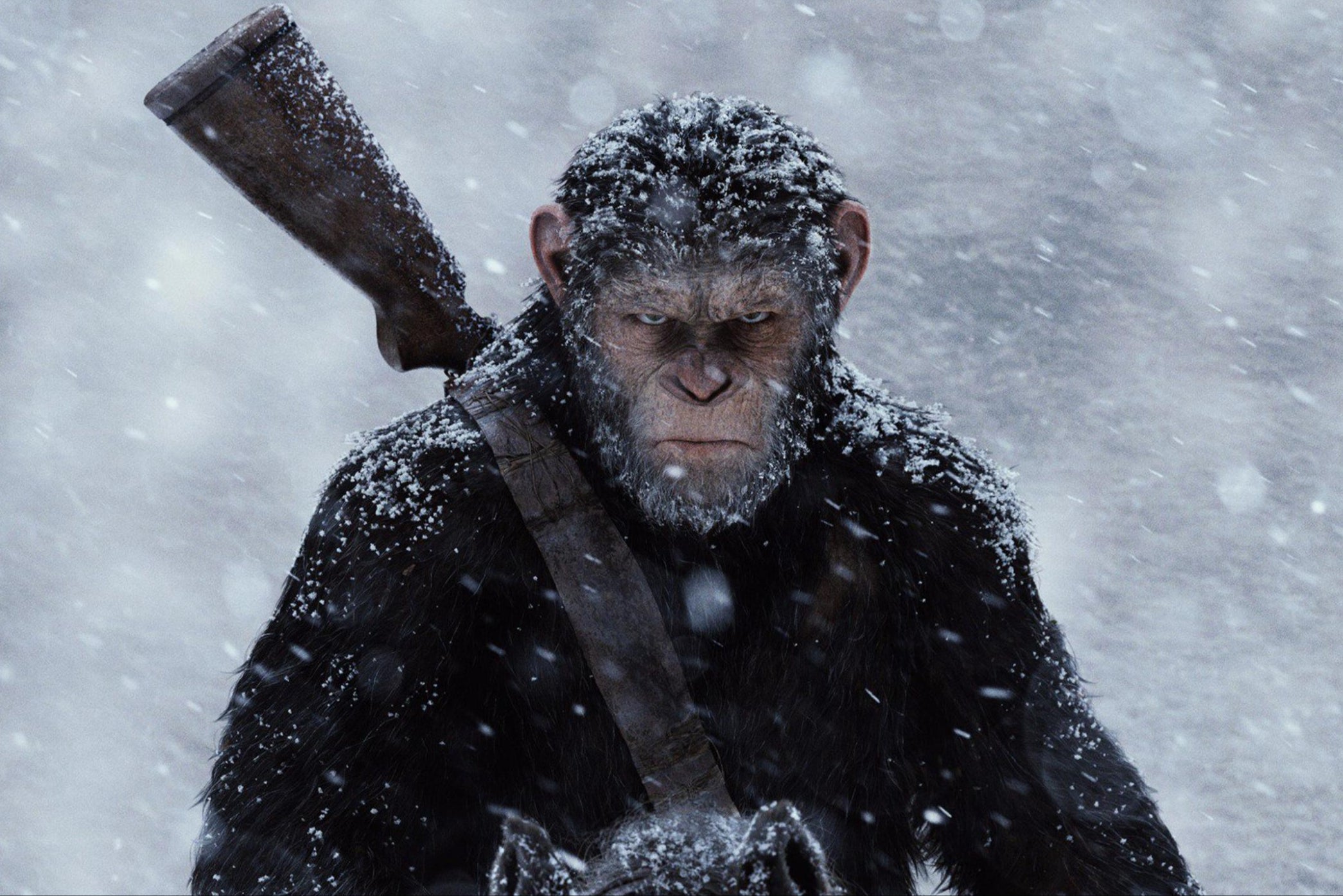
Over the years, Serkis has added many strings to his bow as an actor and director of both indies and big blockbusters, but he is still best known as the man who defined motion-capture. He is the semi-hidden face (and body) of Gollum, Caesar, King Kong, Supreme Leader Snoke, and Captain Haddock. It’s not a stretch to say that the film industry would not look like it does today without him; James Cameron has said previously that it was seeing Serkis, so lifelike and compelling as an ape, that convinced him to make his cinema-conquering Avatar franchise.
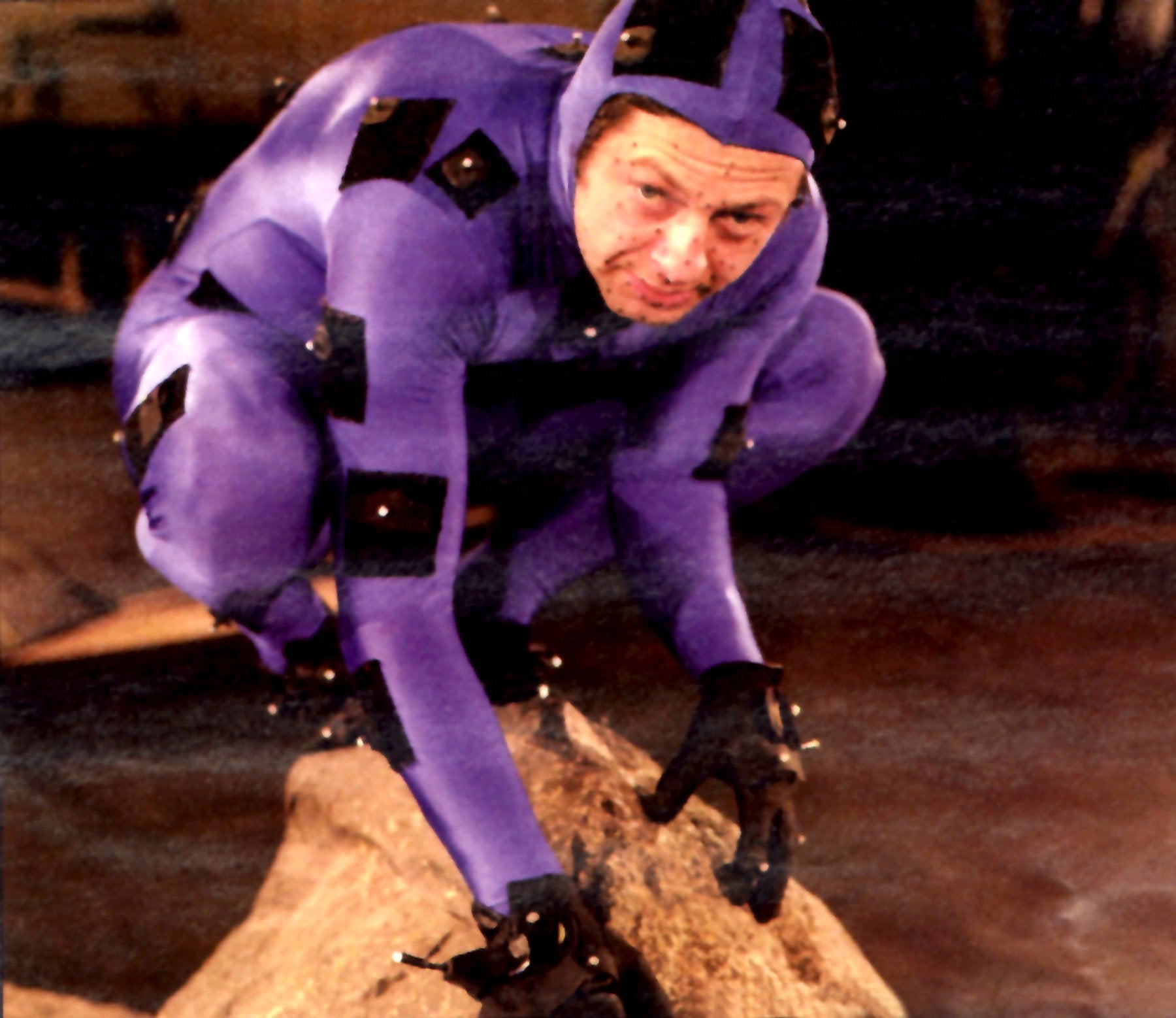
It’s odd to think motion-capture was once demonised as an abomination in acting. Two decades on, those stigmas are no more, says Serkis. “That’s drastically changed. So many great performances have been created with motion-capture with great actors… [like] Kate Winslet and Zoe Saldana in Avatar.” He chalks up a lot of the early disdain to simple confusion. “There was a lot of misunderstanding about what the process was,” says Serkis. “The great thing about Peter Jackson was that he opened up the world of filmmaking to a vast audience, and the process of performance capture was a large part of that.” It’s true that looking at footage of Serkis on the set of the Lord of the Rings trilogy, on all fours and scowling in a hooded skin-tight mo-cap suit, bestows a new understanding and respect for the art form. No one could say that’s any less vulnerable than a “conventional” acting performance. For what it is worth, Serkis does not distinguish between the two. “At all,” he says.
Given his experience pioneering new tech in the industry, Serkis is better positioned than most to have an opinion on artificial intelligence. “I mean, look, AI in any industry is going to have its pros and cons,” he ventures. “If it becomes about taking jobs away from people, that’s not a good thing. However, if it’s about creativity and opening up a world of creativity to people who may not necessarily be great artists, but they’ve got ideas they need help to bring into being…” He trails off.
It would not be totally ridiculous to assume that Serkis has had his face digitally scanned more times than anyone else in the world. Is he worried that his likeness will be used without permission after his death? “I mean, it’s going to happen anyway,” he reasons. “It’s happening now to people regardless of whether they’ve had their face scanned or not. Anyone’s image can be put into terrible positions of being exploited or used in nefarious ways, which is why it’s down to us as human beings to teach AI to be good parents to it. If it’s used in not-positive ways, then it’s because we’ve taught it to operate that way.”
It’s not promising that we’ve proved ourselves to be such bad parents to it so far, I laugh.
“Yes… but that’s the Orwell question: how do we make it better next time around?”
‘Animal Farm’ is in cinemas from 17 July