


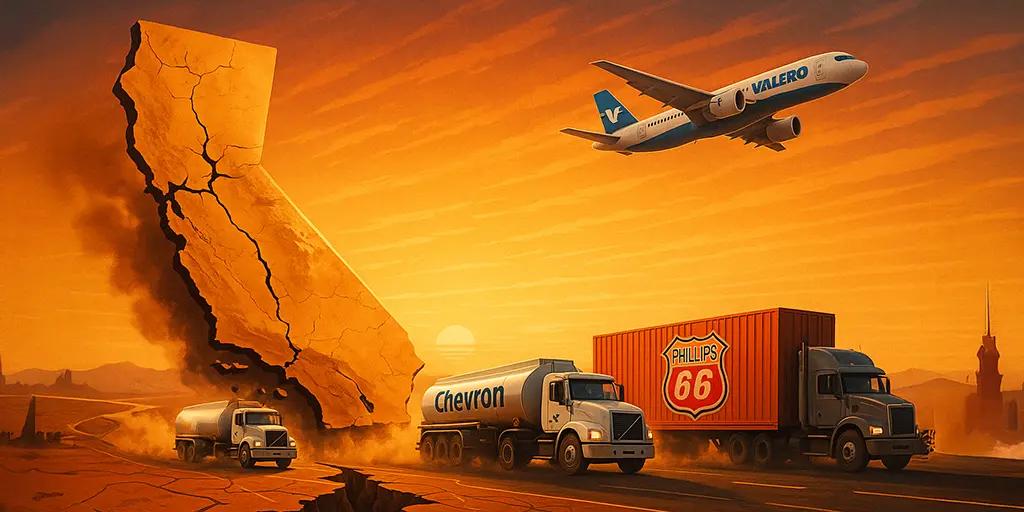
Allowing foreign-flagged tankers to move transportation fuel from the U.S. Gulf Coast to West Coast Ports is only a band aid for California’s humongous demands for transportation fuels.
Ronald Stein, P.E. is an engineer, columnist on energy literacy at America Out Loud NEWS, and advisor on energy literacy for the Heartland Institute and CFACT, and co-author of the Pulitzer Prize-nominated book “Clean Energy Exploitations”. He has been featured in the CIO Look Magazine as one of The Most Influential energy leaders shaping the future of the energy sector.
Mike Ariza is a US Navy veteran with over twenty years of experience in the refining industry. His refining experience extends from the Chevron Refinery in Richmond California, the Flying J refinery in Bakersfield, and the Valero Refinery in Benicia. Mike held the positions of number one control board Operator at Flying J and Senior Refinery Control Board Supervisor at Valero. He was an instructor of both operator field and control board classes. Among his peers he is often referred to as one of the top ten control board operators in the country.
Co-authored by Ronald Stein, and Mike Ariza
Published August 24, 2026, at America Out Loud NEWS
https://www.americaoutloud.news/california-is-running-out-of-refineries-and-running-out-of-time
With no pipelines crossing the Sierra Nevada, California is an energy island, separated from the crude oil supplies and refinery infrastructure of the other continental states. As a result, the state’s transportation fuel needs—for airports, cars, trucks, and ships serving three of America’s busiest ports—must be met by in-state refineries.
With the recent closures of the Valero and Phillips refineries that processed crude oil and the 2023 conversions of Marathon in Martinez and Phillips 66 in Rodeo that are no longer running crude oil, just renewable diesel, California’s remaining six refineries that process crude oil do not have the capacity to produce all that California demands of 58 million gallons of transportation fuel DAILY:
In addition, approximately 5.2 million metric tons of bunker fuel are an annual demand for the ships in three of the busiest Ports in America, located in California.
- Port of Los Angeles had more than 1,800 vessel arrivals in 2024, which includes cruise and merchant ships.
- Port of Long Beach handled over 9.6 million container units in 2024, indicating a very high volume of ship activity, plus cruise ships.
- Port of Oakland, which also handles significant cargo volumes, contributes to the total number of cruise and merchant ships needing fuel.
California policies have reduced the state to six operational crude-oil refineries, forcing it to import 14 to 15 million of the 37 million gallons of gasoline it consumes each day, primarily from Asian countries.
Because of the reduction in transportation fuels being imported to California from Asian refineries, President Trump made the call to waive the Jones Act. This allowed foreign flagged tankers to take fuel receipts from states in the Gulf of America along with the East coast and deliver them via the Panama Canal, to California ports. Normal rules require domestic shipping vessels to be American built, owned, and crewed.
- A Jones Act waiver is a temporary legal exemption that allows foreign-flagged ships to carry cargo between U.S. ports, i.e., from the Gulf Coast through the Panama Canal, to the West Coast ports in California. Under the Jones Act waiver in the last 3 ½ months foreign flagged tankers have transported more gasoline to California than what has been shipped to the state in the last 15 years combined.
- The Petroleum Administration for Defense Districts PADD 5 (West Coast) jet fuel inventories normally track between 9 – 11 million barrels on hand. By April 2026 inventories were at 2.6 million and dropping. This was the lowest inventory for that time in more than 23 Years. Then on April 2, 2026, South Korea, California’s largest supplier of jet fuel, announced that they were suspending jet fuel exports. With this announcement and the fact that PADD 5 inventories were getting near historic lows, Southwest Airlines took unprecedented historic action. Southwest chartered a tanker flagged under the Marshall Islands to transport 306,389 barrels of jet fuel from the Valero Pasadena dock in Houston to berths in Los Angeles and Long Beach. In addition to Southwest Airlines’ unprecedented action, in the last 3 ½ months foreign flagged tankers have transported more jet fuel from PADD 1 and PADD 3 to California than the state has received in the last 36 YEARS COMBINED.
- On August 10, 2026, President Donald Trump approved a 90-day extension of the Jones Act waiver that will allow foreign-flagged vessels to transport critical transportation fuels demanded in California and agricultural commodities between U.S. ports in the Gulf Coast and West Coast from August 17 through mid-November 2026.
California is the 4th largest economy because it has always had sufficient refinery capacity to manufacture the humongous in-state demands for transportation fuels. It is important to note that long term federal waivers will not solve the supply chain of transportation fuels demanded by the 4th largest economy in the world.
The root cause of refineries hemorrhaging out of the state is California state policies. National policy “band aids” cannot provide the long-term solution to a California sponsored hemorrhaging of the in-state refineries needed to manufacture the transportation fuel demands within the state.
With those recent refinery closures of the Phillips in Wilmington and Valero in Benicia and previous conversions of Marathon in Martinez and Phillips 66 in Rodeo that are no longer processing crude oil, just renewable diesel, California must now rely on the importation of transportation fuels that cannot be made in the State, 40% for gasoline demand and 35% for jet fuel and diesel demand.
- With the onset of the Iranian war, crude oil supplies being shipped through the strait of Hormuz were cut off to the Asian countries that were supplying California with transportation fuel. This forced the Asian Refineries to reduce their crude oil charge rates. As the crude oil charge rates declined their production rates of the vital fuels for California also declined to the point where they were forced to suspend their shipments to our state. By the first week of April 2026 nearly all outbound fuel shipments were cut off. With transit times across the Pacific Ocean running between 35 – 45 days this set California on a course for a supply shock starting in the last week of May 2026 with subsequent transportation fuel shortages at the terminal and fuel station levels starting in mid to late June 2026.
- To help California, Gulf refineries bumped up their production rates from a normal of 95-96% to near 98% of capacity. Some refineries also deferred their scheduled 1st and 2nd quarter maintenance shutdowns known as turnarounds to keep production online. Despite the slight increase in refinery rates most of the fuel that has been supplied to California has come from Petroleum Administration Defense District 1 (PADD 1) from the Gulf Coast and PADD 3 from the East Coast. In essence, California policies have caused the state to tap into other national military reserves. Refineries deferring their scheduled turnarounds is hazardous. Turnarounds are scheduled for a reason. Every day of delay further increases the possibility of extended downtimes due to equipment fouling or uncontrolled shutdowns due to equipment failure.
California State policies and economics have caused most of the in-state refineries to close over the last few decades and cease doing any manufacturing in the State which directly relates to transportation fuel shortages. The remaining seven refineries do not have the capacity to manufacture the supply chain demands for 58 million gallons a day of transportation fuels, and the bunker fuel demands of ships at 3 of the busiest ports in America located in California.
California is continuously increasing its reliance on costly foreign fuel imports from major polluting foreign refineries that ship those fuels long distances for 30 to 45 days across the Pacific Ocean by polluting tankers before reaching California ports. Because California’s unique environmental regulations require highly specialized fuel blends, and the domestic tanker fleet is too thin to fulfill its immense volume requirements, the state will be forced to look abroad. Refiners and marketers like those in the California Fuels & Convenience Alliance will likely pivot to importing replacement components from international markets, leaving California more exposed to global supply shocks and high replacement costs. However, given the current global supply strains, it is unlikely that they will find replacement transportation fuel sources. This will most likely lead to supply shocks within the state and the strong possibility of shortages of the daily transportation fuels that are demanded within the State.
Governor Newsom has received three letters from Chevron, Marathon, and PBF, owners of six of the remaining seven refineries in the state. All three letters state that if California refuses to negotiate with them on the newly proposed Cap and Invest amendments that were drafted by the California Air Resources Board (CARB), then they will seriously consider shuttering their operations and leaving the state like Valero did.
California’s Governor, Legislatures, Senators and Representatives must immediately implement plans to support the retention of the 7 remaining refineries. If these refiners shut down, then no amount of waiver tankers will be able to prevent current shortages from becoming humongous catastrophic shortages. These shortages will be of historical proportions. They will affect Nevada, Arizona, and if the ports are shut down, they will reach well into the center of the nation.
California is not proactively supporting the reanimating of the closed Valero Refinery in Benicia or the closed Phillips Refinery in Wilmington. In addition, California government is not making the necessary policy changes to avert the hemorrhaging loss of one or more of the remaining California Refineries.
We strongly encourage the President to immediately invoke the Defense Production Act (DPA) of 1950 which is a United States federal law that gives the President emergency powers to control domestic industries and private businesses. It ensures the nation has enough industrial resources and supplies for national defense, energy infrastructure, and major emergencies.
Please share this information with teachers, students, and friends to encourage Energy Literacy conversations at the family dinner table.