


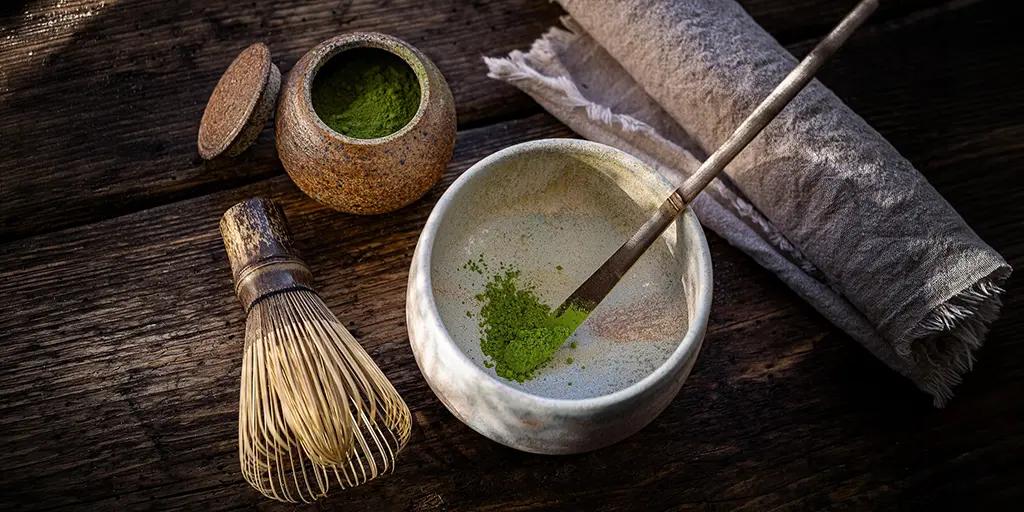
An article at NewScientist, “Matcha is under threat from climate change – can genomics save it?” claims that climate change is causing green tea to suffer low yields and taste worse. This is false for multiple reasons. While hot weather can cause tea to be bitter, Japan has not been seeing significantly higher temperatures, and yields are actually improving over time.
NewScientist claims that warming weather in Japan is “reducing yields and impacting the plant’s distinct umami flavour,” but that tea growers can use genetic selection to grow more heat tolerant plants, though it takes some time.
It is true that temperature can cause some plants like tea to produce more bitter flavored compounds, but it seems suspect that temperatures have changed enough in Japan to impact them permanently, or in a widespread way. NewScientist says that during the spring growing season, daytime temperatures are usually around 20-25°C, but spring temperatures in the region tea is grown for matcha have risen “by roughly 0.6 to 1 Celsius over the past 100 years.”
That means that the new range, logically, might be more like 20.6 or 21°C to 26°C, a change so minimal that it would be unlikely impact the plants all that much, especially since they experience much larger swings in temperature from day to day. And that change has occurred gradually over a hundred years, not instantaneously.
Current matcha tea must not taste all that bad. Over the past decade, (the time with allegedly the highest ever temperatures) matcha, a ground powder form of green tea, has exploded in popularity worldwide.
Tatler Asia reported last year that “matcha production has increased from 1,471 tons to 4,176 tons between 2010 and 2023, or around a 185 per cent increase. In other words, the global demand for the tea powder has increased by almost threefold in thirteen years. The ministry also stated that more than half of the matcha produced in Japan was now exported internationally—including Hong Kong.”
One issue that is not addressed in the article is where those temperatures are recorded. We are given a region, but temperature stations are not evenly spaced out everywhere. They are often located near urban centers, which suffer from an Urban Heat Island Effect, as discussed a multitude of times at Climate Realism, which boost nighttime lows, especially.
The article claims that yields are suffering due to climate change. But data from the United Nations Food and Agriculture Organization show there are ups and downs in yield from year to year, as is the case with any agricultural product. The overall trend in tea yields show an increase, not a decrease. The most recent all-time record for Japanese tea yields occurred in 2018, the second highest in 2024. (See figure below)

This data are for tea in general, but all types of tea come from the same plant. Green tea from which matcha is made is simply harvested when the leaves are still fresh and green, while black tea is harvested much later.
Selective tea breeding takes time and the article admits it has been going on for as long as commercial tea growing has existed. Growers have always carefully selected their plants for tolerance to a wide variety of conditions and for certain traits. Genomic selection can accomplish this much faster. Another option would be to plant or harvest tea earlier, when temperatures are more in line with what producers want.
By the way, although the article treats Japan as the only source of matcha, it is not. China is a major grower and exporter of matcha, exceeding Japan in exports for the first time in 2025. One report says that China is likely to produce 70 percent of the world’s matcha in 2026. The same report forecasts a 50 percent growth in matcha production from 2025 to 2026, to meet fast growing global demand. The latest data from the U.N. Food and Agriculture Organization show that green tea production (matcha being ground up shade grown green tea) in China increased by more than 142 percent from 2010 to 2023. (see the figure, below)
So, modest warming has not seemed to have hampered matcha production in either Japan or China.

False news stories are published almost daily that try to scare people into taking action on climate change by claiming some luxury product they enjoy is disappearing because of it. What’s true of those stories is true of this one as well. There is plenty to be skeptical about claims that matcha is being threatened by climate change. Temperature does impact the taste of tea, but warming has not been extreme in Japan, and modern agriculture technology offers a workaround. Yields and production of green tea and tea in general have increased amid modest warming, with no warming induced production slowdown in evidence.