


By Stephen Heins, The Word Merchant
The cycle is as predictable as it is tragic. As we look at the headlines coming out of Europe—where labor unions are once again clamoring for massive new tranches of funding to combat the looming wildfire season—it feels as if we are watching a poorly scripted sequel to a decade of policy failures here in California.
The parallels are startling, and they reveal a fundamental misunderstanding of what actually causes these catastrophes. Whether in the Mediterranean or the American West, the narrative has become a convenient shield for policymakers: blame “climate change,” ignore the structural rot, and then demand more taxpayer money to sustain a broken status quo.
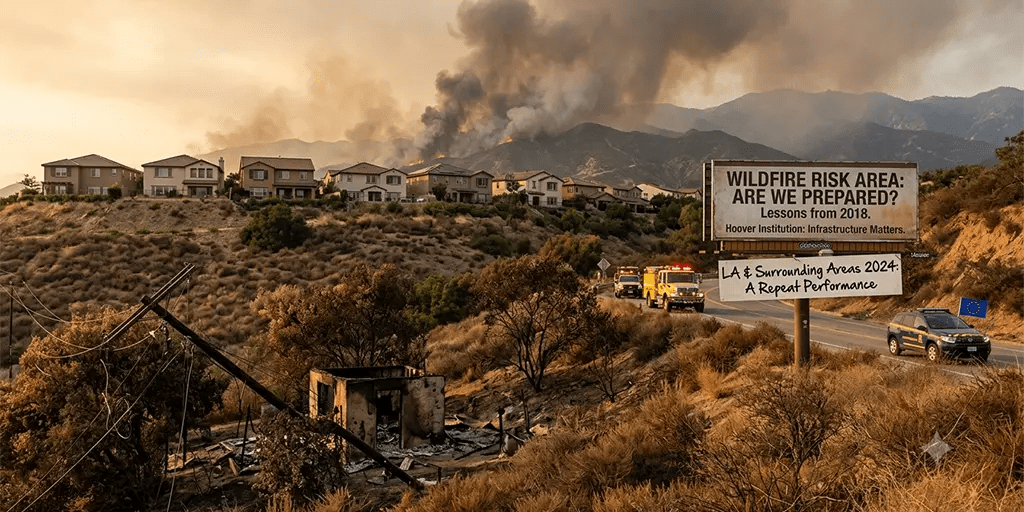
It is the same political theater we have seen since the 2018 fire season, and yet here we are in 2026, still ignoring the lessons laid out in clear, clinical detail by the Hoover Institution years ago.
The Illusion of “Preparedness”
In California, we’ve spent years perfecting the art of the emergency proclamation. We fast-track projects, move money around, and declare our intent to be “resilient.” Yet, the fundamental issues identified by researchers—the aging, neglected utility infrastructure, and the failure to manage forest fuel loads—are often treated as secondary to the political optics of the response.
The Hoover Institution’s analyses of the 2018 Camp Fire were not just historical post-mortems; they were warnings. They pointed to a reality that politicians desperately want to avoid: that catastrophic fires are often the result of decaying, century-old infrastructure and long-standing regulatory paralysis.
In California, the response to the subsequent insurance crisis—driven by years of under-pricing risk and heavy-handed rate controls—has essentially hollowed out the private market. When you force insurers to subsidize risk, they eventually pack their bags. The result isn’t a safer state; it’s a state where the public is increasingly left to hold the bag for unmitigated, unpriced exposure.
The European Mirror
Now, we see the European Union following this exact trajectory. The EU’s recent deployment of a record number of firefighters and aircraft is presented as a triumph of “European solidarity.” While the courage of the individuals on the front lines is unquestionable, this approach is the definition of reactive management. It is a “wait and pray” strategy.
When unions demand more funding for equipment and personnel without addressing the underlying land-management policies or the economic incentives that drive development in high-risk areas, they are simply pouring resources into a leaky bucket. The EU, like California, faces a fiscal reality in which there is simply no “spare” money. Every euro funneled into an emergency response that fails to address the root cause is a euro taken away from economic growth, infrastructure modernization, or genuine, long-term environmental restoration.
The Cost of Ignoring Reality
The Hoover Institution’s critique of California’s policy failures is centered on a hard truth. When you prioritize political narrative over economic and scientific reality, you inevitably end up with a crisis that grows more expensive with every passing season.
We saw this in the 2024 and 2025 fire seasons in Los Angeles and the surrounding regions.
Despite massive investments in suppression, the fires continue to push against the boundaries of our suburban sprawl, exposing the flaws in our planning and our failure to harden our own communities. We are still relying on a system in which public resources are expected to address private-sector failures in risk management.
If Europe continues to follow the California model—treating fire as a purely logistical problem to be solved with more government spending, rather than a land-management and regulatory problem to be solved with market-based incentives and rigorous infrastructure upkeep—they will inevitably face the same fiscal cliff we are currently navigating.
A Call for Substance over Rhetoric
It is time to stop the “whining for more money” and start the difficult work of structural reform. This means:
Decoupling Policy from Panic: Moving away from the cycle of emergency funding and toward long-term, self-sustaining forest management programs.
Infrastructure Accountability: Treating utility maintenance as the primary life-safety issue it is, rather than a regulatory afterthought.
Risk-Based Economics: Allowing insurance markets to reflect the actual risks of living in the wildland-urban interface. If it is too expensive to insure, it is too dangerous to build there.
Prudent Land Use: Ending the trend of allowing development in high-fire-risk zones unless those communities are physically hardened to survive the inevitable.
The fires of the past decade were not merely acts of nature; they were acts of negligence.
If we continue to ignore the evidence, we are not just failing to protect our homes and forests—we are willfully inviting the next disaster, ensuring that we will be here again in another year, begging for funds for a fire that should have been prevented in the first place.
The solution is not more spending; it is more sanity. When will our leaders stop looking for the next emergency budget appropriation and start looking at the maps, the infrastructure, and the incentives that have brought us to this burning point?
Editor’s note. Here are some of the Hoover Institution sources referenced above.
https://www.hoover.org/research/california-burning-causes-and-way-forward
https://www.hoover.org/research/californias-forest-fire-tragedy