


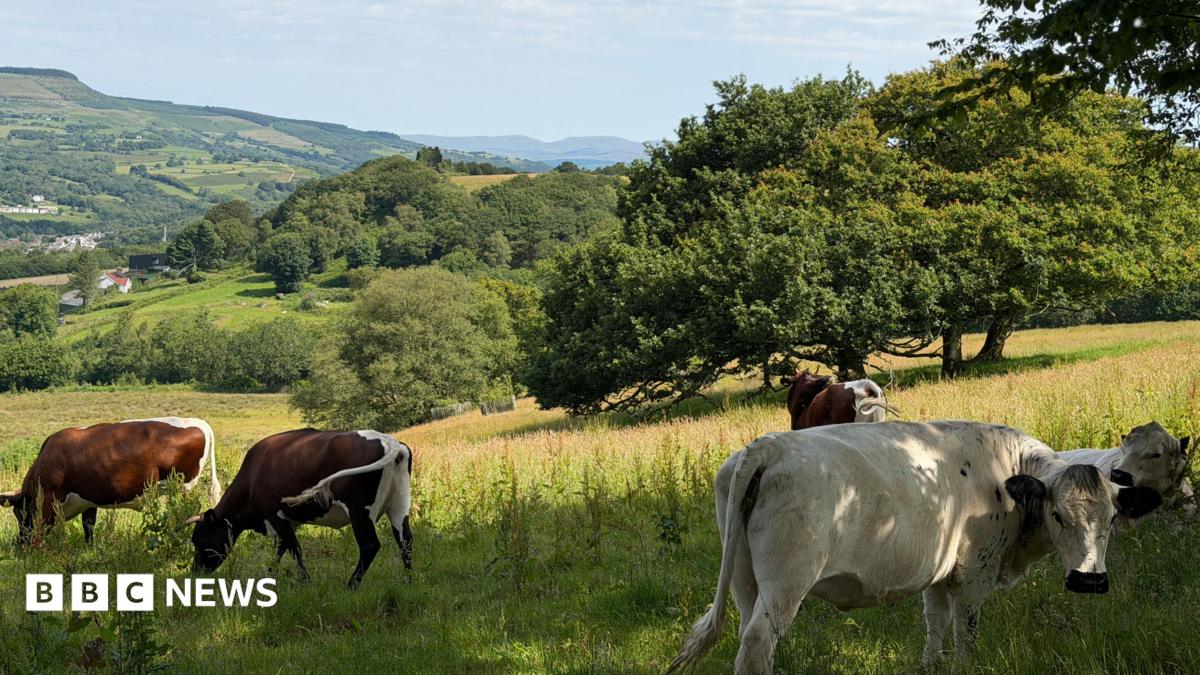
Red tape is making it “far easier” to cut woodlands down in Wales than to create new ones, a charity has warned.
Chris Matts, from the Woodland Trust, said “nature-based systems” are some of the most important tools for tackling climate change, but said bureaucracy was an issue.
Government statistics show the number of trees being planted is increasing, but conservationists have said it is not keeping up with targets.
The Energy and Climate Intelligence Unit predicts that, based on current planning rates, Wales will only meet 10% of its target by 2030, “lagging behind” other devolved nations.
The Welsh government said the statistics do not take into account everything happening on Welsh land.
Keith Roberts, a volunteer with the Woodland Trust who helps maintain a woodland area in Neath, said he gets “a strong sense of ownership” from the area.
“One of the main reasons for planting the trees is part of the local flood defence system, so that’s why we wanted to get involved in making the whole area safer for the Neath residents.”
“The whole point is creating something for future generations,” he said.
Trees can help tackle climate change by absorbing carbon dioxide, offering cooler shaded areas in hot weather and acting as part of flood defence systems.
The Climate Change Committee (CCC), an independent body advising UK nations, includes woodland cover as part of its recommendations for reaching emissions targets, as well as preparing for and adapting to the impacts of climate change.
Devolved governments use the committee’s recommendations to set their own targets and plans.