


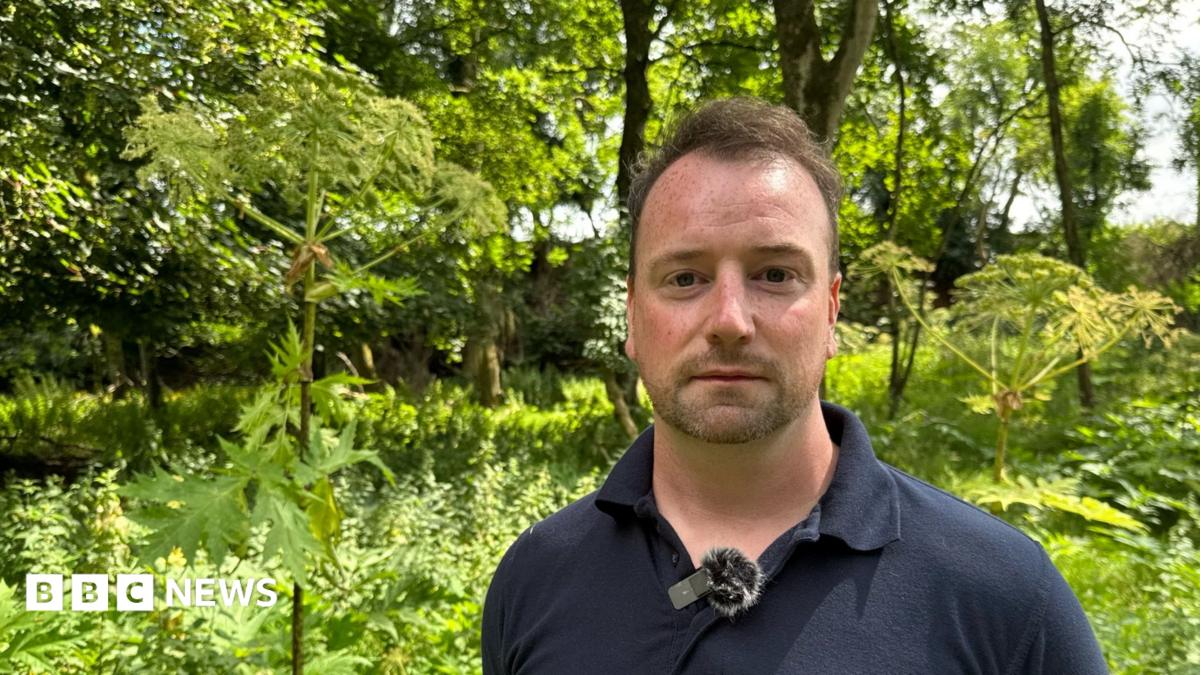
Giant hogweed is a toxic plant.
The plant itself originates from Asia.
The invasive plant has been present in Britain and Ireland since the early 19th Century.
It was first introduced as an ornamental garden plant used primarily in large stately homes, but it subsequently escaped into the wider countryside.
It is now associated with river corridors and lake margins in all counties of Northern Ireland.
It contains a sap which irritates skin when it is exposed to sunlight and can cause blistering and swelling.
Symptoms are usually noticeable within 24 hours and may be made worse by over-exposure to the sun.
The plant, can grow up to 14-15ft (4.5m) tall.
Government advice around contact with giant hogweed is to cover any affected skin immediately, wash with cold water and avoid exposure in the sun.
The Northern Ireland Environment Agency (NIEA) advises anyone who is concerned about giant hogweed to report it through its official monitoring system or the apps iRecord or iNaturalist.
A spokesperson for NIEA said: “Each record is followed up, with landowners being informed of their legal responsibilities to put immediate management measures in place.”