


by Sam Lowry
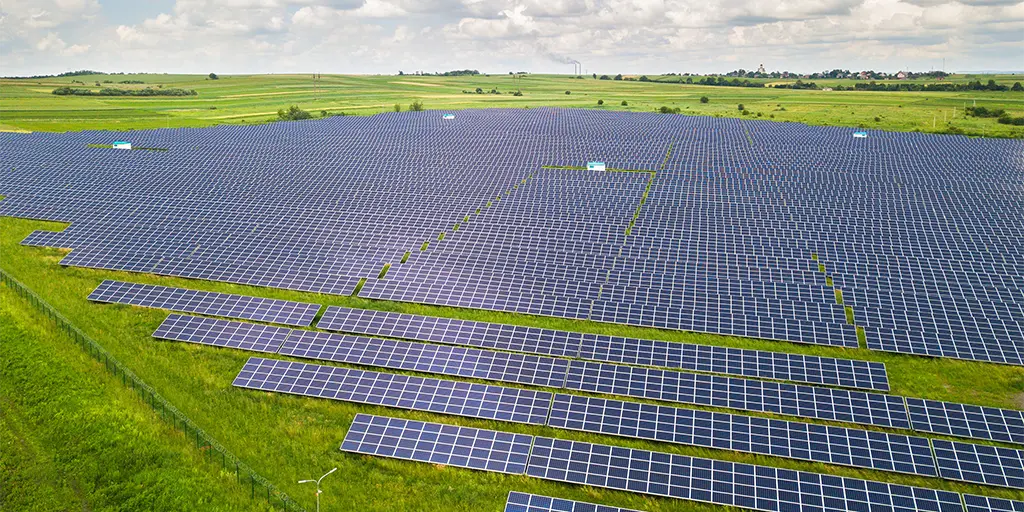
Britain is rapidly installing more solar panels. Across the country, fields that once grew wheat, barley and vegetables are now covered with glass and silicon panels stretching to the hedgerows. The Government calls this a key part of its energy plan.
Developers claim solar is affordable and bound to happen. Planning authorities, under growing pressure to approve renewable projects, often struggle to refuse them. But the main question — whether large-scale solar truly suits the UK’s geography, climate and energy needs — is rarely explored in detail. When it is, the findings are worrying.
This argument is not opposed to solar energy itself. Instead, it asks for a clear look at what solar can and cannot do in a northern, Atlantic-facing country. Policies built on incomplete information can have lasting effects, even after the panels are removed.
The wrong tool for the job
Every energy technology has places where it works best. Geothermal suits Iceland, and hydropower suits Norway. Large-scale solar is most effective in places with strong sunlight, long winter days and steady seasons, such as the Mojave Desert, the edge of the Sahara or southern Spain. The United Kingdom does not have these conditions.
Britain is located between the 50th and 61st parallels north. In December and January, southern England gets about seven hours of daylight and Scotland gets less than six. But not all daylight helps solar panels. Britain’s Atlantic weather brings many clouds, dim light and a low winter sun that hits panels at bad angles so they produce much less power. On the darkest winter days, a solar farm might generate only 3% to 5% of its rated capacity.
This problem would be easier if electricity demand stayed steady all year, but it does not. Britain’s energy use changes with the seasons and this pattern is the opposite of when solar panels work best. People and businesses use much more electricity from November to February for heating, lighting, cooking and industry. The coldest times, which are risky for the elderly and vulnerable, happen when solar power is at its lowest. When demand jumps during a January cold snap, it is met by gas turbines, battery reserves and power imported from Europe, not by solar panels.
This is a basic structural problem, not just an engineering challenge that can be solved. It is caused by Britain’s location and weather. No solar panel, now or in the future, can make British winters sunnier. The gap between when solar produces power and when the UK needs it most will not go away.
Generating when it’s least needed
To be fair, solar power in the UK can make a substantial contribution during the summer. On sunny days in May, June and July, solar panels can supply a large part of the National Grid’s demand, sometimes reaching 20% to 30% at peak times. The industry often points to these numbers, and the figures are correct.
However, these numbers do not show that summer is when energy demand is lowest. Mild weather, longer days and less industrial activity mean the grid is under less pressure. Extra solar power during these months can cause problems. Electricity prices can go negative, generators may be paid to cut output and the grid has to handle power it cannot store. Cheap electricity at the wrong time is not as useful as electricity when it is needed.
Meanwhile, the storage systems that could bridge the seasonal gap, such as batteries or other technologies that store summer surplus for winter use, do not exist at the needed scale. There is no realistic timeline for building them. The truth is that solar in the UK creates extra energy it cannot always use and not enough when it is most needed, and this pattern repeats every year.
The land that cannot be unfarmed
Let’s put the energy calculations aside for a moment and think about what is really being lost.
Britain’s farmland covers about 16.8 million hectares, which is around 70% of the country’s land. Of this, about 6.2 million hectares is arable land that grows cereals, vegetables, oilseed and other food crops. Within this limited amount, Grade 1 and Grade 2 soils — the most productive, able to grow many crops reliably and at high yields — make up only a small and truly irreplaceable part. Once these are lost to development, they do not return.
This land is not just an economic asset but also vital to food security. Given that the UK now imports about half its food, losing more domestic production makes this dependency, which is already a strategic risk, even worse.
Solar developers clearly prefer this type of land. It is usually flat, open, well-drained and already connected to roads and the power grid — features that make it great for farming and, as it turns out, for solar panels. Because of Government contracts and planning policies that support renewables, this land can earn much more as a solar farm than as a working farm. Landowners are making logical choices based on these incentives, but the policies themselves are not logical.
When a field becomes a solar farm, the loss is not temporary. Compacted soil, altered drainage, reduced microbial activity and 25 years without farming leave the land in worse shape. Restoring its ability to grow food is not something that can be done quickly. The UK is making a permanent trade, giving up long-term food security for an energy technology that is not suited to providing power when it is most needed.
Floating solar — from fields to lakes
If losing farmland to solar development is a slow and obvious problem, the new push to put solar panels on Britain’s lakes and reservoirs could be a faster and less visible issue.
Floating photovoltaic systems, known as ‘floatovoltaics’ in the industry, are being promoted as the next step. They avoid the farmland debate, can be placed on existing reservoirs and promise low-cost energy. Industry supporters and some researchers mention possible benefits, such as reduced water evaporation and fewer algal blooms. The Government has welcomed the idea. The case may sound reasonable, but it is not.
Scientific studies on the ecological impact of floating solar show a much more troubling picture than the industry admits. Research has found that floating panels block both wind and sunlight from reaching the water, which disrupts the layers that control a lake’s circulation, oxygen levels and biological activity. This is not a minor effect. Studies have found that hypoxic conditions, or dangerously low oxygen, happen about 80% more often under floating solar installations.
Scientists have identified changes in water chemistry, such as nitrification and oxygen loss, as the most serious risks from this technology. A global survey found that floating solar arrays cover an average of 34% of a lake’s surface — a level at which effects on aquatic food chains, primary production and species makeup become difficult to predict or reverse.
The most candid admission comes from researchers who are broadly sympathetic to the technology. The lead author of a widely cited Bangor and Lancaster University study noted plainly: “We still don’t know exactly how floating panels might affect the ecosystem within a natural lake, in different conditions and locations.”
That statement of uncertainty was made while calling for more deployment. What makes this more worrying is the lack of monitoring as deployment is already happening. Surveys of floating solar operators found that only 15% had ever checked water quality. The industry is expanding a technology without measuring its ecological effects in ecosystems that took thousands of years to reach their current balance.
Britain’s lakes, reservoirs and freshwater bodies are not empty spaces waiting to be used. They are complex, productive ecosystems that support fish, migratory birds, invertebrates and the larger food chains that rely on them. Many are also sources of drinking water. Damaging their water quality or temperature balance to get a small amount of extra solar power — for all the seasonal and geographic reasons already discussed — would cause a different kind of environmental harm than building panels on a field. Fields can, at least in theory, recover. Aquatic ecosystems harmed by low oxygen and disrupted layers may not.
The incomplete balance sheet
Supporters of large-scale solar often use a simple calculation: they divide installation costs by the expected lifetime output to get a cost per kilowatt-hour that looks better than almost any other option. This number has dropped significantly over the past decade thanks to large-scale Chinese manufacturing and is often cited as the main argument for expanding solar. However, this calculation leaves out a lot.
Begin with degradation. Solar panels lose efficiency from the day they are installed. Heat cycling causes microfractures. Grit and particulate matter, particularly in agricultural settings, abrade the surface and scatter incoming light. The adhesives and encapsulants that hold panel layers together break down over time, allowing moisture ingress.
Industry-standard figures suggest a degradation rate of roughly half a per cent per year, reaching around 80% of the original output after 25 years. In a climate where output is already marginal for much of the year, that compounding degradation is not a rounding error — it meaningfully erodes the value case over the life of the installation.
More significantly, panels require maintenance. Arrays spanning tens of thousands of acres require regular inspection, cleaning, electrical testing and component replacement. Inverters — the devices that convert DC output to grid-compatible AC — have shorter lifespans than the panels themselves and must be replaced at least once during a standard installation’s life. None of these activities is free, and none is without energy or resource cost. The labour, equipment, transportation and manufacturing involved all carry real financial and material footprints, which are rarely incorporated into headline cost comparisons.
Then there is the issue of what happens when panels reach the end of their life. The UK is just starting a solar expansion that will, in the 2040s and 2050s, create a huge and predictable wave of old panels. These panels contain cadmium, lead, selenium and other hazardous materials that cannot be safely disposed of in landfills.
There is very little recycling infrastructure for solar panels. The ability to handle the large number of panels that will need processing in the future does not exist, and there is no major public investment to build it. This is a real and large problem that is almost never included in current policy costs.
Finally, there is the question of manufacturing dependency. The overwhelming majority of solar panels used in UK installations are manufactured in China, using energy-intensive industrial processes. The resources required to refine silicon, fabricate cells, assemble panels and ship them to Britain are substantial, and they carry real costs in energy and raw materials — costs that do not appear in UK energy statistics, because accounting conventions assign them to where production occurs rather than where products are consumed.
Britain’s solar panels look cheap and resource-light on the national balance sheet. The full picture of what it takes to make and deliver them is considerably more complex.
What is being crowded out
The argument here is not that solar has no place in Britain’s energy mix. On south-facing rooftops, over car parks, alongside motorways, on genuinely marginal or brownfield land, solar installations can contribute usefully to summer peak generation without consuming productive farmland or distorting land use. Appropriately sited solar is a very different proposition from industrial-scale arrays spreading across Grade 1 and Grade 2 agricultural land.
The tougher question is what political and financial resources are being spent on large-scale solar, and what is being left out as a result. The electricity grid, which is the key infrastructure connecting all types of power generation to users, needs major investment to keep up with a modern, diverse energy system.
Upgrading the grid and building truly effective large-scale storage that can hold energy — however generated — for days or weeks, not just hours, would help national energy security more than covering acres with solar panels that produce extra power on a July afternoon.
These investments are often underfunded, partly because attention and money have gone to high-profile generation projects that look good on paper but do not deliver when the country needs them most.
Every pound spent on a solar farm built on good farmland is a pound not spent on infrastructure that would really help Britain’s energy needs during the toughest times — in the dark, cold winter months.
Conclusion
The expansion of large-scale solar farming in the United Kingdom is a policy built on selective arithmetic and seasonal blindness. It counts summer megawatts without accounting for winter silence. It presents installation costs without incorporating maintenance, degradation, replacement and disposal. It treats the loss of productive farmland as an acceptable externality rather than an irreversible cost.
And now, as resistance to ground-mounted solar grows, proponents are turning to Britain’s lakes and reservoirs — proposing to extend a poorly understood technology into water bodies whose ecological integrity serves far more important purposes than energy generation.
Britain needs an honest national conversation about what its energy future actually requires — one grounded not in what is fashionable or financially convenient, but in the austere realities of northern latitude, Atlantic cloud, the non-negotiable demands of a British winter, and the irreplaceable value of the land and water we are being asked to sacrifice.
Sam Lowry is a senior mnager in the software development industry with an interest in political and social issues. His name is a pseudonym.